Can Employers Detect Cluely?
Yes, in some settings. HackerRank's desktop app detects and closes Cluely, and interviewers catch the rest through reading, timing and follow-up questions.

By Elena Marsh, Job search and applications writer
Updated 15 min read
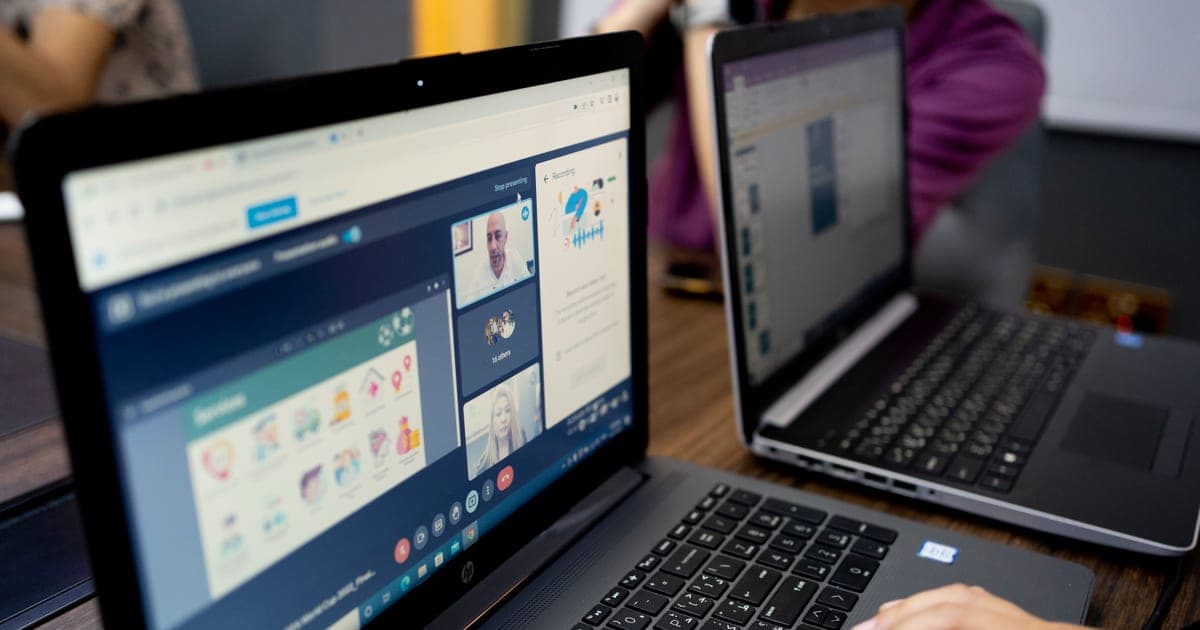
Yes, employers can detect Cluely in some settings. HackerRank's Desktop App Mode names Cluely as a program it detects and closes during a test. A plain Zoom, Microsoft Teams or Google Meet call can't see the Cluely window. In live calls, detection depends on interviewers, recorded sessions and follow-up questions, and these catch more people than the software does.
This page covers each interview setting in turn, what happens to candidates who are caught, how this plays out when you apply from another country, and what to do instead.
Quick answer
Cluely can be detected in secure test apps: HackerRank's Desktop App Mode lists Cluely among the tools it detects and closes (checked November 2026). Video-call software doesn't show the Cluely window, so interviewers rely on reading patterns, timing and probing follow-up questions. Amazon, Anthropic and Goldman Sachs tell candidates not to use AI in interviews unless permitted, and candidates who are caught can be disqualified.
What Cluely is, and why employers watch for it
Cluely is a desktop app that listens to a call, reads your screen and shows AI-generated answers in a small window that only you can see. On its own homepage (checked November 2026), Cluely calls itself an "Undetectable AI Notetaker & Meeting Assistant." The same page says the window is invisible to screen shares, recordings and meeting tools, and that a Cmd or Ctrl + Enter shortcut brings up an answer.
The product began as an interview tool. TechCrunch reported in July 2025 that Cluely was originally called Interview Coder, and that co-founder Roy Lee was suspended from Columbia University after publicising his use of it in an Amazon technical interview. The same TechCrunch report says Cluely raised a $15 million Series A led by Andreessen Horowitz in June 2025.
Two other details from that interview matter for job seekers. Lee told TechCrunch, "We don't care if we're able to be detected or not." He also described invisibility as an "add-on" that most enterprise customers switch off for legal reasons. The company's own founder, in other words, doesn't treat staying hidden as the point of the product.
Recruiters know the history. Cluely is the tool most often named in employer guidance, vendor blog posts and integrity documentation about AI interview help. That's why it's the first thing many proctoring tools were built to catch.
Can HackerRank detect Cluely?
Yes. HackerRank detects Cluely when an employer runs the test in Desktop App Mode. The HackerRank Desktop App Mode article (updated in early November 2026) says the app "detects and closes" other programs candidates try to open, "including invisible cheating tools such as Cluely and Ultracode." It also lists Cluely among the tools it blocks, alongside video-conferencing apps, messaging apps and LLM apps.
According to that same HackerRank page, Desktop App Mode also:
- Forces full screen and logs any attempt to leave it or switch apps
- Flags candidate absence or more than one face on the webcam
- Detects phones and tablets in the webcam view, even when only part of the device is visible, and adds an image to the report
- Requires extra or mirrored monitors to be disconnected
- Watches typing and deleting patterns in the editor that may suggest outside communication
- Saves a webcam image every 15 seconds and records the whole screen with a timeline of events
Desktop App Mode is one of three levels. The HackerRank Test Integrity page describes them like this:
- Secure Mode: a controlled browser with full screen, copy and paste blocked, and tab-switch alerts.
- Proctor Mode: Secure Mode plus AI screenshot analysis, plagiarism detection and webcam anomaly detection.
- Desktop App Mode: Proctor Mode plus monitoring at operating-system level.
Copy and paste tracking and tab tracking are built into every test without any setup.
The employer chooses the mode, and you won't always know which one applies until you start. If a test asks you to install a HackerRank desktop app, assume that anything running on your computer can be seen. For how HackerRank judges the code itself, see how HackerRank plagiarism detection works.
Can CodeSignal and other assessment platforms detect Cluely?
CodeSignal doesn't publish a list of named apps the way HackerRank does. It says it detects unauthorised AI use through behaviour instead. The CodeSignal press release of 25 February 2026 says 35% of its proctored assessments in 2025 involved flagged fraud or cheating attempts, up from 16% in 2024. It uses "digital, AI, and human-led proctoring" and a proprietary "Suspicion Score."
The same release lists the most common signals in flagged sessions:
- 35% showed frequent off-screen referencing
- 23% showed unusually linear typing, with few pauses or little debugging
- 15% showed high similarity to known answers or leaked content
These signals don't depend on seeing Cluely's window. A candidate who reads answers from any hidden source looks off-screen, types in a straight line and produces answers that match what AI tends to write. Detection by behaviour catches the habit, whichever tool caused it.
The release also lists four main violation types: copy-paste plagiarism, proxy test-taking (someone else sits the test), unauthorised AI use and identity fraud. CodeSignal's press release doesn't mention Cluely by name.
Other assessment vendors, including Talview, Proctor360 and Mercer Mettl, publish their own anti-AI material. We couldn't open primary documentation for all of them, so we can't confirm exactly what each detects. If your test is on one of these platforms, read the instructions the platform shows before you start. They usually list what's monitored. For one example, see what to expect from a Mercer Mettl proctored test.
Can Zoom, Teams or Google Meet detect Cluely?
No, not at the software level, as far as published documentation shows. None of the major video platforms advertises a feature that spots Cluely, and Cluely's own site claims its window doesn't appear in screen shares or recordings. Even competitor blogs that rank for this query agree that the video software itself doesn't flag the overlay.
That doesn't make a video interview safe for someone using Cluely. Video interviews are where employers rely most on people, and people notice different things from software. Business Insider reported in February 2025 that Amazon gave its recruiters internal guidance on spotting AI use, including unnatural reading patterns and typing while a question is being asked. Fortune's June 2025 summary of the Amazon, Anthropic and Goldman Sachs policies says Amazon candidates caught using AI can be disqualified.
Some employers also add third-party detection tools to their video interviews. These tools generally look for the same behaviour CodeSignal describes: gaze, timing and answer patterns. The vendors publish their own accuracy claims, and we couldn't verify any of those figures independently.
How interviewers spot AI help without any software
Most candidates who get caught using an AI assistant are spotted by the person on the call, not by software. The signs are the same ones an experienced interviewer has always used to tell whether someone knows the material.
The patterns hiring teams describe most often:
- Eye movement: the candidate's eyes move across the screen in reading lines, or keep returning to one spot after every question.
- Delay and then fluency: a pause of a few seconds after every question, then a polished, fully formed answer.
- Answers that sound written: full sentences with tidy lists and textbook terms, from someone who sounded different in small talk.
- Breakdown under follow-ups: the first answer is perfect, but "why did you choose that?" or "what if the input were twice as large?" gets a vague reply.
- Generic examples: a behavioural answer with no names, dates, numbers or details that someone who was there would know.
- Mismatch between rounds: a strong live interview followed by a weak take-home, or the reverse.
The follow-up question is the main check. AI can produce an answer, but it's slow to defend a decision the candidate never made. Interviewers who suspect help change one condition in the problem, ask the candidate to explain a line of their own code, or return to an earlier answer 20 minutes later. Software can't make those questions go away.
Gartner's guidance to employers points the same way. Personnel Today's August 2025 report on Gartner's candidate fraud research says Gartner recommends training recruiters to spot evasive behaviour, explaining what AI use is acceptable and adding safeguards such as in-person interviews.
Detection by interview setting
The table below sets out what each setting can see, based on sources checked in November 2026. "Software" means the platform itself, and "people" means interviewers or reviewers.
| Interview setting | Does the software see Cluely? | What usually exposes AI help | Source |
|---|---|---|---|
| HackerRank Desktop App Mode | Yes: named as detected and closed | Logged app switching, webcam phone detection, screen recording | HackerRank KB, Nov 2026 |
| HackerRank Proctor or Secure Mode (browser) | Not by name | Tab switching, paste events, webcam images, AI plagiarism checks | HackerRank KB |
| CodeSignal proctored assessment | Not by name | Suspicion Score: off-screen looking, linear typing, answer similarity | CodeSignal, Feb 2026 |
| Live Zoom, Teams or Meet call | No published feature | Reading eyes, timing, failed follow-up questions | Fortune, Jun 2025 |
| One-way video or AI interviewer | Depends on vendor | Recorded video reviewed later, often more than once | Vendor docs vary |
| In-person round | Not relevant | The candidate has no screen | Entrepreneur, Aug 2025 |
| After hiring | Not relevant | Performance in the first weeks of work | Our view |
The last row is opinion, not a published policy. It still deserves attention. A new hire who can't do what they showed in the interview is noticed quickly in a remote team, where output is visible in tickets, pull requests and written updates.
What happens if you're caught using Cluely in an interview?
The usual result is disqualification from that hiring process, and sometimes from future applications to the same company. Employers have said so in writing.
- Amazon: internal guidelines reported in 2025 say "please do not use gen AI tools during your interview unless explicitly permitted", and candidates who break the rule can be disqualified (Fortune, June 2025).
- Anthropic: the Anthropic candidate AI guidance (checked November 2026) says live interviews are "all you–no AI assistance unless we indicate otherwise". AI can help refine an application draft you wrote yourself, but not to invent experience.
- Goldman Sachs: campus recruiting emails say the bank "prohibits the use of any external sources, including ChatGPT or Google search engine, during the interview process" (Fortune, June 2025).
- Google: chief executive Sundar Pichai said in June 2025 that Google wants "at least one round of in-person interviews", to make sure candidates know the fundamentals (Entrepreneur, August 2025).
We've seen claims on competitor blogs that particular companies impose permanent bans on Cluely users. None of those blogs linked to a primary source, so we're not repeating them as fact.
Beyond the formal rules, the consequences we'd warn any candidate about are these:
- The offer can be withdrawn later. Session recordings are kept, and a reviewer can look at them after the interview.
- Recruiters and agencies remember names. Staffing firms and outsourcing companies work with the same hiring managers over and over.
- You'd start a job you can't do yet. Remote teams measure output, and probation periods exist to catch a mismatch.
- Contracts can end quickly. Contractor agreements often allow termination at short notice. See what contractors are entitled to when a contract ends.
For the wider risks of any live AI helper, including Cluely's competitors, see AI interview helpers during a live interview: the risks.
Does it matter where you live?
The detection tools work the same way wherever you are, but the stakes are often higher if you're applying across borders. CodeSignal's February 2026 release reported a 48% flagged rate in Asia-Pacific against 27% in North America. A flagged attempt isn't proof of cheating, and the release doesn't explain the gap. It does tell you that employers hiring internationally are paying close attention to integrity signals.
In-person rounds are harder from abroad
The common fix for AI cheating is to bring back an in-person round, as Google and McKinsey did. That fix is hard to apply to a candidate in Lagos, Lahore or Lima who is applying to a company in California. In our experience, an employer who can't fly you in for a final round leans more heavily on recordings, proctored tests and probing video interviews. A flag on your session is harder to clear, because there may be no in-person meeting where you can show what you know.
Time zones raise the temptation
Interviews across time zones often land at bad hours. A 9am interview in New York (UTC-5 until 14 March 2027) is 2pm in London, 7:30pm in Mumbai and 10pm in Manila. A 10am San Francisco slot (UTC-8) is 11:30pm in India and 2am in Manila. Tired candidates are more tempted to lean on a tool.
The legitimate fix is to ask for a better slot. Most recruiters will move an interview by a few hours if you ask early and politely. If you live in a different time zone from the employer, that request is normal and expected.
Proctoring and your privacy
Proctored tests record webcam images, your screen and sometimes audio. Data protection rules on recording differ by country, and the employer or test platform should explain what it keeps and for how long. If a test asks for something you're not comfortable with, such as installing an app on a shared family computer, ask the recruiter about alternatives before you start, not halfway through.
Is using Cluely in an interview ever allowed?
Yes, when the employer explicitly allows AI help. Anthropic's guidance says "unless we indicate otherwise", and Amazon's says "unless explicitly permitted". Some employers now set AI-allowed coding tasks on purpose, because their engineers use AI at work. In those cases, using an assistant openly is part of the test.
The difference is disclosure. Using AI openly when it's allowed is the job. Using a hidden overlay when the rules say no AI is misrepresentation, whatever the tool's marketing calls it.
If the instructions don't say, ask in writing before the interview. Here's an example email you could adapt:
Subject: Question about tools for Thursday's technical interview
Hi Priya, thank you for the invite. Before Thursday, could you confirm whether AI assistants such as Copilot or ChatGPT are allowed during the coding exercise, or whether you'd like me to work without them? I'm happy either way, and I want to make sure I follow your process. Best regards, [Name]
That email is an example, not a template any employer has endorsed. It does two useful things: it shows you respect the rules, and it gives you a written answer if anything is questioned later.
What to do instead of using Cluely
Use AI before the interview, not during it. Almost every employer that bans AI in live interviews is happy for you to prepare with it. These steps make it less likely you'll feel you need a hidden helper:
- Collect the likely questions. Read the role's interview guide on the RemoteApply interview questions hub and write out your own answers.
- Rehearse aloud with an AI as the interviewer. Ask a chatbot to play the role, ask follow-up questions and point out vague answers. Practice in the language of the interview.
- Prepare five stories with real detail. For each, note the situation, what you did, a number that shows the result, and what you'd do differently. Real detail is what makes follow-up questions easy.
- Do timed practice on the same platform. HackerRank and CodeSignal both offer practice environments. Get used to full screen and webcam monitoring before the real test.
- Practice thinking out loud. Interviewers care about how you reason. A partial answer you can explain often scores better than a perfect one you can't.
- Ask for adjustments you need. If you have a disability, a stammer, or a connection that drops, ask the recruiter for reasonable adjustments (extra time, captions, a backup phone line) before the interview.
If English isn't your first language and nerves are what make a hidden prompt tempting, read how to sound confident in interviews as a non-native English speaker. For timed tests in general, see how to pass an assessment test for a remote job.
If you were flagged but didn't use anything
False flags happen. Looking down at notes you were allowed to use, a second monitor you forgot to unplug, or a pause to think can all trigger automated signals. Reply quickly and calmly, offer to retake the test under any conditions they choose, and keep your reply factual. See what to do if you're falsely flagged for cheating in an online interview.
Frequently asked questions
Does Cluely show up on screen share?
No, according to Cluely's own marketing, which says its window is invisible to screen shares and recordings (checked November 2026). That claim is about video software only. Interviewers still see your face, your eyes and your timing, and a secure test app such as HackerRank's Desktop App Mode can see the Cluely process itself.
Can an interviewer tell if I'm reading answers?
Often, yes. Reading produces line-by-line eye movement, a consistent delay before each answer and phrasing that sounds written. Amazon's 2025 recruiter guidance reportedly told interviewers to watch for unnatural reading patterns, and probing follow-up questions are where most reading candidates struggle.
Can a proctored test see an AI tool on my phone?
It can see the phone itself. HackerRank's Desktop App Mode documentation says it detects phones and tablets in the webcam view, even when partly visible, and adds an image to the report. CodeSignal lists frequent off-screen referencing as its most common signal in flagged sessions in 2025. Using a second device breaks the same no-AI rule as using an overlay on your laptop.
Is it illegal to use Cluely in a job interview?
Not in itself, as far as we could find: we didn't identify a specific law against using an AI assistant in an interview. It does break the stated rules of employers such as Amazon, Anthropic and Goldman Sachs. The usual consequence is disqualification, and the recordings are kept. If you're worried about a specific legal situation, ask a lawyer in your own country.
Can employers find out I used Cluely after I've been hired?
Yes, they can. Proctored sessions are recorded and can be reviewed later, and the gap between interview performance and real work shows up quickly in a remote team's tickets, code and written updates. An offer or contract obtained by misrepresenting your skills can be withdrawn or ended.
Do AI interviewers and one-way video interviews detect Cluely?
It depends on the vendor, and most don't publish whether they detect named apps. One-way and AI-led interviews are recorded, so the same reading and timing patterns can be reviewed by AI and by people, often more than once. See what to expect from an AI interviewer.
Does Cluely Pro or the "undetectable" setting make a difference?
Not against the methods that catch most candidates. A paid setting can only affect whether the window appears on screen. It does nothing about HackerRank Desktop App Mode closing the process, about webcam phone detection, or about an interviewer asking you to explain your own answer.
Key takeaways
- HackerRank's Desktop App Mode names Cluely as a tool it detects and closes during tests (HackerRank documentation, checked November 2026).
- Zoom, Teams and Google Meet have no published feature that detects Cluely, so live interviews rely on interviewers, recordings and follow-up questions.
- CodeSignal flagged cheating or fraud attempts in 35% of proctored assessments in 2025, mostly through behaviour such as off-screen looking and linear typing (CodeSignal, February 2026).
- Amazon, Anthropic and Goldman Sachs tell candidates not to use AI in interviews unless permitted, and getting caught usually means disqualification.
- Candidates applying from abroad often can't fall back on an in-person round, so an integrity flag is harder for them to clear.
- AI is a legitimate preparation tool before the interview, and it's allowed during one only when the employer says so.
Next steps
Prepare with real questions instead of a hidden prompt. Start with the guide for your role on the interview questions hub, then find openings that match where you live on the RemoteApply jobs board, where every job shows which countries can apply. Save the search as an email alert so new roles reach you.
Sources were opened and checked on 17 November 2026. HackerRank, CodeSignal, Cluely and employer pages change, so recheck them before a specific test.
Sources
- HackerRank Desktop App Mode, HackerRank Knowledge Base
- HackerRank Test Integrity, HackerRank Knowledge Base
- Cluely homepage, Cluely
- Why Cluely's Roy Lee isn't sweating cheating detectors, TechCrunch
- Goldman Sachs wants students to stop using ChatGPT in job interviews, Fortune
- Candidate AI guidance, Anthropic
- CodeSignal detection systems press release, CodeSignal
- Google, McKinsey reintroduce in-person interviews, Entrepreneur
- By 2028 one in four candidate profiles will be fake, Personnel Today
- Cluely detection: what employers can actually do, HireValid
- Can Cluely be detected?, Final Round AI