Can You Work Remotely From Japan?
Yes, with the right status. Japan's digital nomad visa allows 6 months for eligible nationals earning ¥10m+. Working holiday and spouse visas also work.

By Daniel Reyes, Cross-border work writer
Updated 15 min read
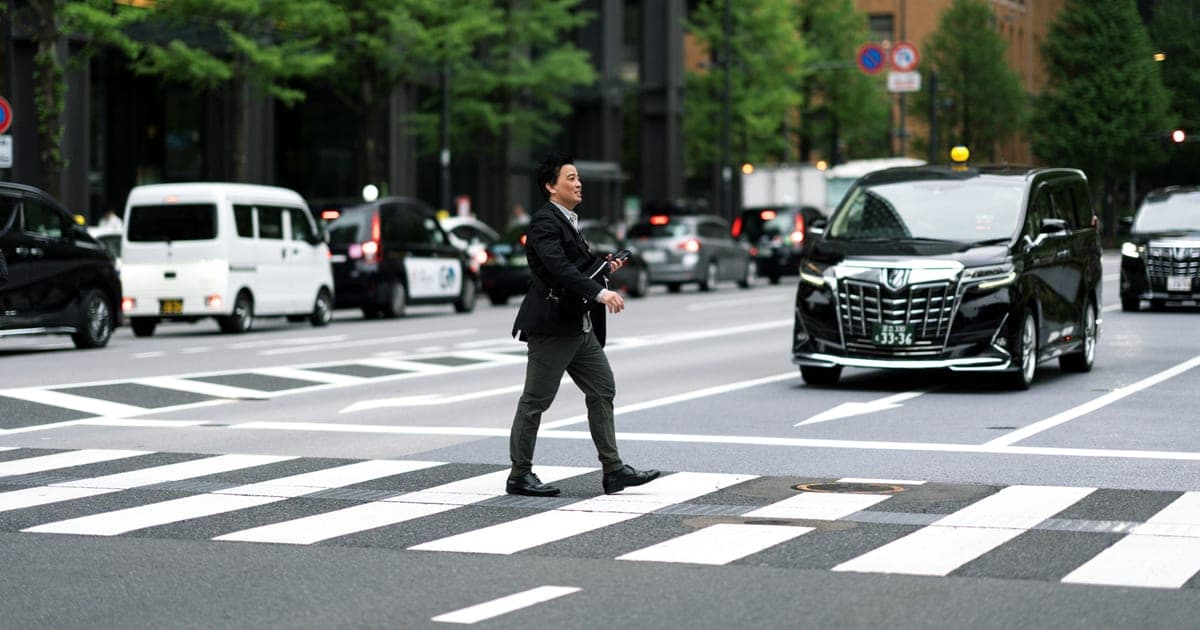
Yes, you can work remotely from Japan for a foreign employer or foreign clients, but only with the right immigration status. Since March 2024 there is a dedicated six-month digital nomad visa for higher earners from eligible countries. Other routes are a working holiday visa, a spouse or permanent resident status, or a work visa tied to a Japanese employer. Turning up on a visa-free tourist entry and working for months is not one of the routes.
This page covers which route fits your passport and income, the tax rules once you're living in Japan, what your employer has to agree to, and the hours you'd actually be working.
Quick answer
You can work remotely from Japan for an employer outside Japan if your status allows it. Japan's digital nomad visa (Designated Activities) gives six months, with no extension, to people from eligible visa-exempt countries with a tax treaty who earn at least ¥10 million a year and hold ¥10 million of health cover (as of November 2026). Working holiday, spouse and permanent resident statuses are the other main routes.
Can I work remotely from Japan on a tourist visa?
No route on Japan's official pages lets you treat a visa-free tourist entry as a remote-working stay. Japan created the digital nomad status in 2024 for exactly this kind of stay.
Short visa-free entry to Japan covers tourism and business activities, not paid work, as Wise's September 2026 guide sums up the rules (Wise). Some guides say answering a few emails for your home employer during a holiday is fine. One, Japan Dev, argues that remote work for an overseas employer is allowed during a 90-day stay, but it cites no official source for that.
Our reading: checking in on a work matter during a two-week trip is a very different thing from spending 90 days working full time from a Tokyo flat. The second is what the digital nomad status was built for. If you're planning a working stay of any real length, use a status that explicitly covers it, or confirm with the Immigration Services Agency of Japan or the Japanese embassy in your country first.
For a general view of short working trips abroad, see working remotely from another country for a week.
Japan's digital nomad visa: who qualifies
The Japan digital nomad visa is a "Designated Activities" status for people who work remotely for employers or clients outside Japan. It launched at the end of March 2024 (Fragomen).
These are the requirements, as published by Fragomen, the Japan National Tourism Organization (JNTO) and Japan Dev, checked November 2026:
| Requirement | What it means |
|---|---|
| Nationality | A country that is both on Japan's visa-exemption list and has a tax treaty with Japan |
| Income | At least ¥10 million a year |
| Work | Remote work for a foreign employer, or self-employed work for clients outside Japan |
| Health cover | Private insurance covering at least ¥10 million for death, injury and illness, for the whole stay |
| Length | Up to six months, no extension |
| Family | Spouse and unmarried children may come, but can't work |
| Residence card | Not issued |
| Where to apply | Japanese embassy or consulate in your country of residence |
What the ¥10 million threshold means in dollars
The ¥10 million income threshold was about $68,300 when the scheme launched, according to Fragomen's March 2024 note. The yen has moved since then. Check today's rate before you assume you clear it.
That figure filters out most early-career remote workers. A support agent or junior developer paid in dollars will usually fall short. A senior engineer, product manager or established freelancer with several clients is more likely to qualify.
Which countries are eligible
The digital nomad visa is open only to nationals of countries on Japan's visa-exemption list that also have a tax treaty with Japan. The official list is a PDF published by the Immigration Services Agency, which JNTO links to. Examples given by Japan Dev include the United States, the United Kingdom, EU member states, Australia, Singapore and South Korea.
The test is simple. If your passport needs a visa for a short visit to Japan, you can't use this route. That rules out many of the readers who most want it, including many in South and Southeast Asia, Africa and parts of Latin America. Check the current list rather than relying on a blog's summary, ours included.
Limits people miss
The digital nomad visa doesn't let you work for a Japanese company or take on Japanese clients (Fragomen). You can't get a residence card, so opening a Japanese bank account, signing a long lease or joining national health insurance is hard or impossible. Fragomen also notes you need a re-entry permit if you leave Japan and want to come back within the six months.
The status cannot be extended. Several secondary sources say you must wait before applying again, but we couldn't confirm the exact waiting period from an official page. Ask the consulate.
Other ways to live in Japan and keep a foreign remote job
The digital nomad visa isn't the only route. The table below compares the main statuses for someone whose employer or clients are outside Japan. It is built from the sources cited in this article, checked November 2026.
| Status | Who can get it | Length | Foreign remote work |
|---|---|---|---|
| Visa-free short stay | Visa-exempt nationalities | Usually up to 90 days | Not a working status |
| Digital nomad (Designated Activities) | Eligible nationalities earning ¥10m+ | 6 months, no extension | Yes, that's its purpose |
| Working holiday | Ages 18 to 30 (25 or 26 for some) from 32 partner countries | Up to 1 year | Part-time work allowed |
| Spouse of a Japanese national or permanent resident | Married to a Japanese national or permanent resident | Renewable | No work restriction |
| Permanent resident | Long-term residents who qualify | Indefinite | No work restriction |
| Work visa (e.g. Engineer/Specialist in Humanities) | Sponsored by a Japanese employer | Renewable | Side work may need immigration permission |
| Student | Enrolled full time | Course length | Only with a part-time permit, capped hours |
Working holiday
Japan has working holiday agreements with 32 countries and regions as of April 2026, according to japan-guide.com. They are Argentina, Australia, Austria, Canada, the Czech Republic, Chile, Denmark, Estonia, Finland, France, Germany, Hong Kong, Hungary, Iceland, Ireland, Italy, South Korea, Latvia, Lithuania, Luxembourg, Malta, the Netherlands, New Zealand, Norway, Poland, Portugal, Slovakia, Spain, Sweden, Taiwan, the United Kingdom and Uruguay.
The United States, India, the Philippines, Brazil and every African country are missing from that list. The age limit is 18 to 30, or 25 or 26 for some countries, and the stay is up to one year.
Working holiday holders may work part time, says japan-guide.com. The scheme is meant to be a holiday first, which is why guides warn against treating it as a full-time remote job. Japan Dev notes that remote earnings on a working holiday count as foreign income taxable in Japan.
Spouse and permanent resident status
Spouse and permanent resident statuses carry no work restriction, as ExpatsJapan summarises. If you're married to a Japanese national and living in Japan, immigration isn't the obstacle to keeping a foreign remote job. Tax, social insurance and your employer's policy are the questions left to answer.
Work visas and student status
A work visa such as Engineer/Specialist in Humanities/International Services is tied to activities with a sponsoring employer in Japan. Taking a second, foreign remote job alongside it may need permission from immigration, so confirm with the Immigration Services Agency before you sign anything.
Student visa holders need a separate permit for part-time work, capped at 28 hours a week during term and 40 during long breaks, according to Japan Dev.
Which route fits you? Examples by passport
The right route depends mostly on your passport, then your income and age. This table applies the rules above to common readers. Treat it as a starting point and confirm on the official lists.
| You are | Digital nomad visa | Working holiday | Realistic route |
|---|---|---|---|
| US citizen earning $90,000 | Likely eligible if income clears ¥10m | Not available | Digital nomad, 6 months |
| UK citizen, 27, earning $45,000 | Probably under ¥10m | Available | Working holiday |
| German citizen, 35, freelancer earning ¥12m | Likely eligible | Over age limit | Digital nomad |
| Australian citizen, 29 | Depends on income | Available | Either |
| Filipino or Indian citizen | Ruled out if your passport needs a visa for Japan | Not available | Spouse or PR status, or a Japanese employer |
| Brazilian or Kenyan citizen | Check the visa-exemption and treaty list | Not available | Check the list; otherwise as above |
| Married to a Japanese national | Not needed | Not needed | Spouse status, no work restriction |
If you're in the Philippines, India, Kenya or Nigeria, the honest answer is that a few months in Japan on a foreign remote salary is hard to arrange unless your status comes from family or a Japanese employer. Your remote career is better built from home, with Japan as a holiday. Remote roles listed for Asia-Pacific are often the better target.
Do you pay tax in Japan if you work remotely for a foreign company?
You pay Japanese income tax on your remote salary if you become a Japanese tax resident. For short stays, salary for work physically done in Japan can still count as Japan-source income.
Who is a Japanese tax resident
A Japanese tax resident is someone who has a domicile ("jusho") in Japan or has kept a place of abode ("kyosho") there for one year or more (PwC Worldwide Tax Summaries, reviewed August 2026).
That's why the "183 days makes you a tax resident" line you'll see on some pages is misleading for Japan. Japan's test is about where your life is based. Someone who moves to Japan with a spouse visa and an open-ended plan can be resident from day one. Someone on a six-month digital nomad stay usually doesn't meet the one-year test, though their home country normally still taxes them.
Non-permanent residents: the remittance rule
A non-permanent resident is a Japanese tax resident who isn't a Japanese national and has lived in Japan for five years or less in the past ten (PwC).
Non-permanent residents are taxed on Japan-source income, and on foreign-source income only to the extent it is paid in Japan or remitted to Japan. Permanent-resident taxpayers (in the tax sense, which is different from the immigration status) are taxed on worldwide income. Non-residents are taxed only on Japan-source income (PwC, reviewed August 2026).
Here's the catch for remote workers: pay for work you physically do in Japan is generally Japan-source, even if a foreign company pays it into a foreign account, as Wise's guide explains. Don't assume that keeping your salary in a bank account at home keeps it out of Japanese tax. Get a Japanese tax accountant (zeirishi) to look at your case.
Rates and a worked example
Japanese national income tax runs from 5% to 45% across seven bands. A 2.1% surtax applies to the national tax, and local inhabitant's tax is a flat 10% (PwC, reviewed August 2026).
| Taxable income (¥) | National rate | Deduction (¥) |
|---|---|---|
| Up to 1,950,000 | 5% | 0 |
| 1,950,001 to 3,300,000 | 10% | 97,500 |
| 3,300,001 to 6,950,000 | 20% | 427,500 |
| 6,950,001 to 9,000,000 | 23% | 636,000 |
| 9,000,001 to 18,000,000 | 33% | 1,536,000 |
| 18,000,001 to 40,000,000 | 40% | 2,796,000 |
| Over 40,000,000 | 45% | 4,796,000 |
Example calculation, with assumptions stated: a Japanese tax resident whose taxable income after all deductions is ¥8,000,000.
- National income tax: ¥8,000,000 × 23% − ¥636,000 = ¥1,204,000.
- Surtax: ¥1,204,000 × 2.1% = ¥25,284.
- Inhabitant's tax: roughly ¥8,000,000 × 10% = ¥800,000. The real figure uses a slightly different base and is billed the following year, as ExpatsJapan notes.
- Total: about ¥2,029,000, or roughly 25% of taxable income.
This is an illustration, not a quote. Social insurance, foreign tax credits, treaty relief and deductions all change the real number. The annual return (kakutei shinkoku) is due in mid-March for the previous calendar year.
Your home country still matters
Moving to Japan doesn't switch off your home country's tax. US citizens stay taxable in the US wherever they live. Many other countries tax you until you formally become non-resident. Tax treaties decide who taxes what and how double tax is relieved.
The US–Japan case, including the 183-day treaty test and why the US foreign earned income exclusion rarely helps on a six-month stay, is covered in working remotely for a US company in Japan.
What your employer has to agree to
Your employer has to agree before you work from Japan, and many won't. Fragomen notes that Japan's digital nomad status depends on an employment or client relationship outside Japan. Nothing in the visa forces your employer to let you go.
There are three reasons companies say no:
- Permanent establishment risk. An employee working in Japan can, in some cases, create a taxable presence there for the employer, depending on their role and authority (Wise).
- Payroll and social insurance. If you live in Japan long term as an employee, someone normally has to run Japanese payroll and social insurance.
- Data and security rules. Some contracts bar access to company systems from certain countries without approval.
Employer of record or contractor
An employer of record (EOR) is a company that legally employs you in a country on your real employer's behalf, handling payroll, tax withholding and benefits. Remote, one EOR provider, says its service lets companies hire employees in Japan without a local entity, paying monthly in yen (Remote country explorer, checked November 2026).
Being a contractor is the other option. You invoice your client and handle your own Japanese tax and, as a resident, your own national health insurance and pension enrolment. Calling a full-time employee a contractor doesn't change what the relationship actually is. Wise warns that misclassification can create tax, labour and social insurance liabilities whatever the contract says.
The trade-offs are covered in employer of record vs contractor, and the reasons companies refuse are in why fully remote companies won't let you work from another country.
Don't just go and tell nobody
Working from Japan without telling your employer can break your contract and create tax problems for both of you. It is also easier to spot than people think, through IP addresses, login locations and payroll records. See whether you can be found out working from abroad. Ask first, in writing.
What hours would you work from Japan?
Japan uses Japan Standard Time, UTC+9, all year, with no daylight saving. For most Western employers, that means late evenings or nights.
The table below shows a 9am to 5pm working day in the employer's city, converted to Tokyo time. The winter column applies from November 2026 to March 2027; US clocks go forward on 14 March 2027 and UK and EU clocks on 28 March 2027.
| Employer location | 9am to 5pm there = Tokyo (winter) | Tokyo (summer) |
|---|---|---|
| San Francisco (UTC−8/−7) | 2am to 10am | 1am to 9am |
| New York (UTC−5/−4) | 11pm to 7am | 10pm to 6am |
| London (UTC+0/+1) | 6pm to 2am | 5pm to 1am |
| Berlin (UTC+1/+2) | 5pm to 1am | 4pm to 12am |
| Bengaluru (UTC+5:30) | 12:30pm to 8:30pm | 12:30pm to 8:30pm |
| Singapore or Manila (UTC+8) | 10am to 6pm | 10am to 6pm |
| Sydney (UTC+11/+10) | 7am to 3pm | 8am to 4pm |
Note that Sydney's summer is the northern winter, so in the table "winter" means November to March, when Sydney is on UTC+11.
For a US employer, full overlap means working through the Japanese night. Most people who manage this agree a few shared hours (for example 7am to 10am Tokyo, which is 5pm to 8pm in New York in winter) and work asynchronously the rest of the day. Employers in Asia and Australia fit Japan far better. For more on the regional patterns, see what APAC time zones mean for working hours.
Getting paid while you're in Japan
On a digital nomad stay, you'll almost certainly keep being paid into your home bank account. Japanese bank accounts usually need a residence card, which the digital nomad status doesn't provide (Fragomen, Wise).
Spending in yen then means either a card with low foreign exchange fees or a multi-currency account such as Wise. Exchange markups and transfer fees eat into a foreign salary over six months, so compare the actual rate you get against the mid-market rate.
If you're a long-term resident with a residence card, you can open a Japanese account. An EOR will pay you monthly in yen (Remote), and a contractor can invoice in dollars or euros and convert. Remember the non-permanent resident remittance rule above: moving money into Japan can affect your tax, so keep clear records of what you transfer and when.
Common mistakes people make
These are the errors that come up most in guides and questions about working remotely from Japan:
- Treating 90 visa-free days as a working allowance. The visa-free entry is for tourism and business visits, not a three-month remote stint.
- Assuming 183 days decides tax residency. Japan uses domicile and a one-year place-of-abode test (PwC).
- Assuming foreign income kept abroad is never taxed. Pay for work physically done in Japan can be Japan-source.
- Applying for the digital nomad visa without checking the nationality list. If your passport needs a visa for a short visit, you're out.
- Forgetting the health insurance amount. The policy must cover at least ¥10 million for the whole stay, not just the first month.
- Planning a second six months. The status can't be extended. Plan your exit date from the start.
- Taking Japanese clients on a digital nomad visa. That's outside the status (Fragomen).
Frequently asked questions
Can I work remotely from Japan for 3 months?
Only if your immigration status allows it. A visa-free tourist entry isn't a working status. For a three-month working stay, the digital nomad visa is the official route if your nationality and ¥10 million income qualify. Working holiday holders from the 32 partner countries can also work part time.
Can I work remotely from Japan for a year?
Not on the digital nomad visa, which is capped at six months with no extension. A year-long stay usually means a working holiday visa (if you're 18 to 30 and from a partner country), spouse or permanent resident status, or a Japanese work visa. A year in Japan is also likely to make you a Japanese tax resident.
Can I apply for Japan's digital nomad visa from inside Japan?
No, as of the latest guidance we found. Fragomen says applications go through the Japanese consulate in your country of residence, and in-country applications were not available. Check with the consulate, as procedures can change.
Does the digital nomad visa count self-employed income?
Yes. Self-employed people with clients outside Japan can qualify, according to Fragomen and JNTO, as long as their annual income is at least ¥10 million. You will need documents proving that income.
Can I work for Japanese clients on a digital nomad visa?
No. The digital nomad status covers work for employers or clients outside Japan only, and Fragomen notes that working for a Japanese company or earning locally is prohibited. Japanese work needs a different status.
Will I need Japanese health insurance as a remote worker?
It depends on your status. Digital nomad visa holders must have private cover of at least ¥10 million and can't join the national scheme because they have no residence card. Long-term residents generally enrol in Japanese health insurance through an employer, an EOR or their local municipality.
Can I bring my family on Japan's digital nomad visa?
Yes. A spouse and unmarried children can accompany you for the same period if they are also from eligible countries, according to Fragomen and JNTO. Family members can't work.
Key takeaways
- You can work remotely from Japan for a foreign employer or foreign clients, but only on an immigration status that permits it.
- Japan's digital nomad visa gives six months, with no extension, to eligible nationalities earning at least ¥10 million a year, with ¥10 million of health cover (as of November 2026).
- Working holiday visas (32 partner countries, ages 18 to 30) and spouse or permanent resident statuses are the main longer routes.
- Japanese tax residency depends on domicile or a one-year place of abode, not on 183 days, and pay for work done in Japan can be Japan-source income.
- Japan is UTC+9 all year, which means night work for US employers and evening work for European ones.
- Get your employer's written agreement before you go. Permanent establishment, payroll and security concerns are common reasons for a refusal.
Next steps
Start with your passport: check whether it's on Japan's visa-exemption list and the working holiday list, then whether your income clears ¥10 million. If you're looking for remote work you could do from Japan, roles listed for Japan or across Asia-Pacific are the best fit for the hours. You can filter by where applicants may live on the jobs board and save the search as an email alert.
Visa rules, income thresholds and tax figures in this article were checked against the sources linked in November 2026. Japanese government pages could not be opened directly, so confirm the current eligible-country list with the Immigration Services Agency or your nearest Japanese consulate before applying.
Sources
- Japan: Digital Nomad Visa Now Available, Fragomen
- Digital Nomad Visa, Japan National Tourism Organization
- Japan Digital Nomad Visa, Japan Dev
- How to live in Japan and work remotely for an overseas company, Japan Dev
- Working Remotely in Japan for a US Company, Wise
- Remote Work in Japan as a Foreigner, ExpatsJapan
- Japan: Individual, Residence, PwC Worldwide Tax Summaries
- Japan: Individual, Taxes on personal income, PwC Worldwide Tax Summaries
- Working Holiday Visa, japan-guide.com
- Employer of Record in Japan, Remote country explorer