Low-Cost Countries With a Reliable Power Grid for Remote Work
Malaysia, Thailand, Peru, Morocco, Jordan and Poland pair low living costs with under one outage a month. Data, recent blackouts and how to check.

By Samuel Brandt, Scams, safety and remote work life writer
Updated 16 min read
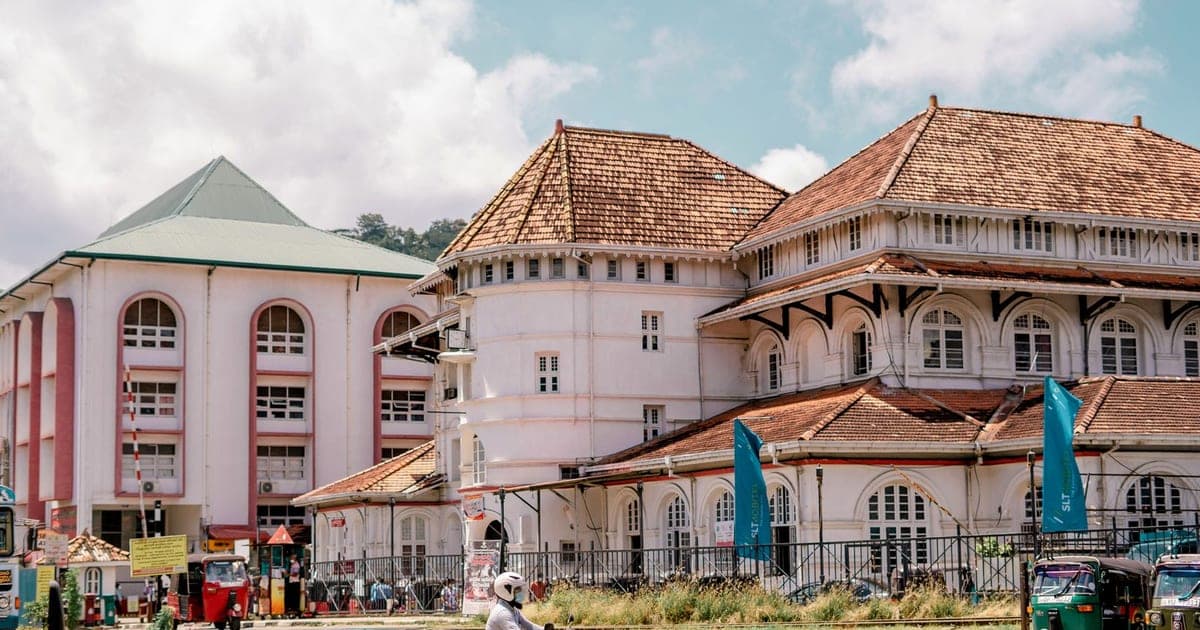
The cheapest countries with a reliable power grid for remote work, going by World Bank outage surveys and mid-2026 cost-of-living data, are Malaysia, Thailand, Peru, Morocco, Jordan and Poland. Vietnam, Indonesia and the Philippines are cheaper still and usually fine, but they have had serious shortages in the hot season. The cheapest places of all, such as Pakistan, Bangladesh and Nigeria, are where outages are worst.
Below you'll find the two numbers side by side for about 25 countries, the recent blackouts the averages miss, what backup you still need, time-zone fit and how to check a specific city before you move.
Quick answer
As of November 2026, Malaysia, Thailand, Peru, Morocco, Jordan and Poland combine low living costs with few grid outages: businesses there report fewer than one outage a month in World Bank surveys. Vietnam, Indonesia and the Philippines are cheaper but have had seasonal shortages. Treat every figure as a national average. Check your city, and keep a small battery backup wherever you live.
How we compared power reliability and cost
We used two public datasets, one for power and one for price, and read them together.
Power reliability. The World Bank Enterprise Surveys ask businesses how many power outages they experience in a typical month. Our World in Data publishes this indicator (World Bank code IC.ELC.OUTG) for surveys run between 2006 and 2023 (Our World in Data, power outages in firms per month). We downloaded the full country file in November 2026 (Our World in Data CSV) and took each country's most recent survey.
Cost of living. Numbeo's Cost of Living Index compares consumer prices between countries. It is built from crowdsourced data, and a lower number means cheaper. We used the 2026 mid-year ranking (Numbeo cost of living by country). For scale, the United States scores 69.7 and the United Kingdom 68.2 on that ranking.
The method has three limits you should know about.
- The outage data is about firms, not homes. The surveys sample businesses in the main commercial cities. A flat in a capital may match that experience. A village three hours away may not.
- Some surveys are old. The Philippines figure is from 2015 and Mexico's from 2010. A grid can get much better or much worse in ten years. South Africa, covered below, shows how fast it can change.
- Numbeo measures prices, not your budget. Rent in the area you choose can swing your costs more than the national index does.
We set the cut-off for "reliable" at fewer than one outage a month in the latest survey, and "low cost" at a Numbeo index below 50. Both thresholds are our judgement, not an official standard.
Which inexpensive countries have a reliable power grid?
These countries had fewer than one outage a month for businesses in their latest World Bank survey and score under 50 on Numbeo's mid-2026 cost index.
| Country | Outages a month (survey year) | Cost of living index, mid-2026 | UTC offset |
|---|---|---|---|
| Vietnam | 0.2 (2015) | 26.9 | +7 |
| Indonesia | 0.5 (2015) | 24.7 | +7 to +9 |
| Philippines | 0.1 (2015) | 29.1 | +8 |
| Morocco | 0.3 (2019) | 31.2 | +1 |
| Peru | 0.5 (2017) | 32.5 | −5 |
| Malaysia | 0.4 (2019) | 34.0 | +8 |
| Mongolia | 0.5 (2019) | 34.5 | +8 |
| Colombia | 0.8 (2017) | 35.6 | −5 |
| Thailand | 0.2 (2016) | 36.8 | +7 |
| Tunisia | 0.9 (2020) | 29.0 | +1 |
| Egypt | 0.8 (2020) | 21.5 | +2 or +3 |
| Jordan | 0.2 (2019) | 39.9 | +3 |
| Turkey | 0.7 (2019) | 40.2 | +3 |
| Bulgaria | 0.8 (2019) | 42.0 | +2/+3 |
| Serbia | 0.7 (2019) | 42.5 | +1/+2 |
| Argentina | 0.8 (2017) | 44.9 | −3 |
| Poland | 0.2 (2019) | 46.2 | +1/+2 |
| Portugal | 0.3 (2019) | 48.7 | 0/+1 |
Sources: World Bank Enterprise Surveys via Our World in Data; Numbeo 2026 mid-year index. Where two offsets are shown, the second is summer time.
The table shows plenty of choice. On these numbers, a reliable grid and low prices are not as rare as forum threads suggest. The harder part is that the oldest figures belong to some of the most popular cheap destinations.
Southeast Asia: cheap, mostly stable, with a hot-season risk
Malaysia is the most balanced pick in the region on this data. Its 2019 survey showed 0.4 outages a month and its cost index is 34.0. Kuala Lumpur and Penang are the usual bases for remote workers. Our page of remote jobs open to applicants in Malaysia shows which employers hire people living there.
Thailand's business survey (0.2 outages a month, 2016) is also strong. Bangkok and Chiang Mai are the cities most remote workers pick. Thailand's figure is ten years old, so check local news for the province you're considering.
Vietnam's survey figure (0.2 outages a month, 2015) hides a real event. In May and June 2023, northern Vietnam had rolling power shortages after a heatwave and drought cut hydropower output. The World Bank estimated the cost at about $1.4 billion, or 0.3% of GDP (VnExpress International, August 2023). The same report says limited transmission capacity stopped the north from drawing on surplus power in the south. If you choose Vietnam, Ho Chi Minh City has historically been the safer bet than Hanoi during a dry hot season.
The Philippines has the best number in the table (0.1 outages a month), but it comes from 2015. On 13 May 2026, two 500-kilovolt transmission lines tripped, the Luzon and Visayas grids went on red alert, and Meralco cut power to more than 200,000 customers in parts of Metro Manila, Batangas, Bulacan, Cavite, Laguna and Rizal for about three hours on average (Philstar, 14 May 2026). A red alert means supply cannot meet demand, and utilities then cut power to selected areas on a rotating schedule. A yellow alert means reserves are thin but supply still meets demand. Red alerts tend to cluster in April and May, when demand peaks. Typhoons cause local outages too.
Indonesia's 0.5 outages a month comes from a 2015 survey. Java and Bali, where most remote workers base themselves, are the better-supplied parts of a country spread over thousands of islands.
Latin America: Peru and Colombia lead, Ecuador shows the hydropower risk
Peru (0.5 outages a month, 2017) and Colombia (0.8, 2017) are both cheap and share UTC−5 with New York in winter. That makes them strong picks for anyone working US hours. Argentina (0.8) is reliable on the survey but has the highest cost index of the group at 44.9.
Ecuador is a warning about relying on hydropower in a drought. Its 2017 survey showed 1.2 outages a month, and its cost index of 31.0 is low. In 2024, though, the country had rolling blackouts of up to 13 hours from mid-April until rationing was lifted on 6 May (eNCA, May 2024). Cuts came back from 23 September and reached up to 14 hours a day before residential rationing ended on 20 December 2024 (Al Jazeera, December 2024). eNCA reported that hydropower supplies 92% of Ecuador's electricity. Colombia had also stopped selling power to Ecuador because its own hydro reserves were low.
Mexico's survey data is from 2010 (1.6 outages a month), too old to judge either way. Costa Rica (1.3, 2010) scores 56.8 on cost, so it falls outside "low cost" here. Readers in the region can browse remote jobs open to Latin America.
North Africa and the Middle East: Morocco and Jordan stand out
Morocco (0.3 outages a month, 2019, cost index 31.2) is one of the best combinations in the whole dataset. It is also within an hour of UK and Western European working hours. Tunisia (0.9, 2020, cost 29.0) is cheaper but has a less convincing outage figure.
Jordan (0.2, 2019) has a very low outage rate, but its cost index of 39.9 is higher than Morocco's. Egypt has the lowest cost index in this table (21.5) and recorded 0.8 outages a month in its 2020 survey. We could not confirm Egypt's grid position since then from an official source, so check current local reporting before you rely on that figure.
Europe: Poland and Portugal are reliable, the Balkans are cheaper
Poland (0.2 outages a month, 2019) and Portugal (0.3) have very reliable grids, but they are the most expensive countries on this shortlist. Bulgaria (cost 42.0) and Serbia (42.5) are cheaper, with 0.7 to 0.8 outages a month in 2019.
Portugal's figure also comes with a caveat. On 28 April 2025 at 12:33 CEST, the whole mainland grids of Spain and Portugal went down. The European network of grid operators, ENTSO-E, called it the most severe European blackout in over 20 years (ENTSO-E, final report page, March 2026). The final report, published on 20 March 2026, blamed a combination of voltage control and stability failures rather than one cause. One rare event does not make a grid unreliable, but it does show that no grid is immune.
Cheap countries where the grid is the problem
These countries are inexpensive, but their latest World Bank surveys show frequent outages. People live and work remotely in all of them. They just need serious backup to do it.
| Country | Outages a month (survey year) |
|---|---|
| Nigeria | 32.8 (2014) |
| Bangladesh | 26.2 (2022) |
| Pakistan | 22.0 (2022) |
| Zambia | 13.3 (2019) |
| Tanzania | 8.9 (2013) |
| Nepal | 8.7 (2013) |
| Ghana | 8.4 (2013) |
| Ethiopia | 8.2 (2015) |
| South Africa | 7.7 (2020) |
| Dominican Republic | 7.4 (2016) |
| Kenya | 3.8 (2018) |
| Georgia | 2.2 (2019) |
| Armenia | 2.5 (2020) |
Source: World Bank Enterprise Surveys via Our World in Data, opened November 2026.
Pakistan's cost index (20.3) is among the lowest on Numbeo, but businesses there reported 22 outages a month in 2022. Bangladesh's figure (26.2, also 2022) is similar. If you already live in one of these countries, our guide to handling power cuts when you work abroad and the backup guides linked below matter more than this list.
Georgia (2.2) and Armenia (2.5) are popular with remote workers because they are cheap (cost indexes of 34.9 and 40.9). On this data they sit in the middle: not the worst, but not on the reliable shortlist.
South Africa: the figure is out of date in a good way
South Africa's 7.7 outages a month dates from 2020, when Eskom's load shedding (scheduled rolling blackouts) was severe. By early October 2026, Eskom reported 504 consecutive days without load shedding, counted from 16 May 2025 (SAnews, 4 October 2026).
A related measure called load reduction still affected 202,590 customers, about 2.8% of Eskom's customer base, mainly in parts of Gauteng and KwaZulu-Natal. Load reduction is when Eskom cuts supply to specific areas with high rates of illegal connections or meter tampering. Eskom aims to end it by March 2027. If you're choosing a South African suburb, ask whether it has been under load reduction. For cost, South Africa scores 38.9, similar to Thailand.
Why national outage averages can mislead you
A national average is a starting point, not a guarantee for your street. Four things change what you'll actually get.
- Season. Grids that depend on hydropower struggle in droughts (Vietnam in 2023, Ecuador in 2024). Grids that run near capacity struggle in heatwaves (Luzon in April and May).
- City versus countryside. The World Bank surveys businesses in the main commercial cities. Rural lines are longer and get repaired later.
- Your building. A condo tower with its own generator behaves differently from a house on an overhead line. Buildings in Manila, Lagos and Karachi often advertise "100% generator backup" for this reason.
- The age of the data. Grids change. South Africa improved sharply after 2023, while the Philippines survey predates its recent red alerts.
There is also a difference between a full outage and the internet going down. In many cities, mobile towers and fibre cabinets have their own batteries. Al Jazeera's reporting from Ecuador in December 2024 described a job seeker racing to send applications before 8pm, "when the power, and his internet, go out", which happens when the local network has no backup either.
Do you still need backup power in a country with a reliable grid?
Yes, a small one. Even a country averaging 0.2 outages a month will have the odd cut, and the timing is what hurts: a 20-minute outage during a client call or a timed assessment costs more than an hour at 3am. The good news is that in a stable-grid country you only need to cover your router and laptop for a short time.
Example calculation (assumptions stated, check your own adapters):
- Fibre modem and Wi-Fi router: assume 20 watts combined. Your adapters print their maximum draw, and real use is usually lower.
- Outage you want to cover: 2 hours.
- Energy needed: 20 W × 2 h = 40 watt-hours (Wh).
- Add about 20% for conversion losses: roughly 48 Wh.
Many small power banks and mini UPS units sold for routers list their capacity in watt-hours or milliamp-hours. Use watt-hours to compare them. Your laptop's own battery covers the laptop. In a country from the "grid is the problem" table, scale this up: eight hours of daily cuts needs a power station or inverter with batteries, which our guide to reliable backup power compares. For the router specifically, see power backup for your Wi-Fi router.
Keep a second internet route too. A mobile hotspot on a different network from your home broadband covers you when the fibre cabinet down the road loses power. Whether a satellite connection is worth the cost is a separate question, covered in a separate guide.
Which of these countries fits your employer's working hours?
Time zone matters as much as the grid, because the cheapest stable country is no use if it puts you on permanent night shift. Here is how a standard 9am to 5pm day at the employer's end converts, using winter time (New York UTC−5, London UTC+0, after the US and UK clocks changed on 1 November and 25 October 2026).
| You live in (UTC offset) | 9am–5pm New York is | 9am–5pm London is |
|---|---|---|
| Peru, Colombia (−5) | 9am–5pm | 4am–12pm |
| Argentina (−3) | 11am–7pm | 6am–2pm |
| Morocco, Portugal (0/+1) | 3pm–11pm | 10am–6pm |
| Poland, Serbia (+1) | 3pm–11pm | 10am–6pm |
| Bulgaria, Egypt (+2) | 4pm–12am | 11am–7pm |
| Jordan, Turkey (+3) | 5pm–1am | 12pm–8pm |
| Thailand, Vietnam (+7) | 9pm–5am | 4pm–12am |
| Malaysia, Philippines (+8) | 10pm–6am | 5pm–1am |
Morocco normally runs on UTC+1 but switches to UTC+0 during Ramadan. Egypt uses summer time, so check its current offset. Most Asian and Latin American countries on this list don't change their clocks. When the US moves to daylight saving on 14 March 2027, and the UK and EU on 28 March 2027, all of these gaps shift by an hour for a few weeks and then settle.
The pattern is clear:
- Working US hours: Peru and Colombia are the strongest cheap, stable-grid choices.
- Working UK or EU hours: Morocco, Poland, Serbia and Bulgaria.
- Working Australian or Asian hours: Malaysia and Thailand are a natural fit. Malaysia (UTC+8) is two hours behind Sydney's winter time (UTC+10).
If you already work night hours for a US client from Asia, see our guide to working US hours from the Philippines for what that schedule does to your day.
Can you move to one of these countries and keep your remote job?
Moving for a better grid only works if your job comes with you. Three things decide that.
Where your employer lets you live. Most remote jobs are remote within named countries or a region, and an employer that pays you through an employer of record (EOR) can only pay you in countries where that EOR runs payroll. An employer of record is a company such as Deel, Remote.com or Oyster that legally employs you on the client's behalf in your country and handles payroll and tax. Ask before you book a flight. Our guide to working from another country explains why many fully remote companies refuse moves abroad, and a second guide covers when to raise it.
Contractor or employee. Contractors usually have more freedom over where they live, but they handle their own tax, and moving can change which country taxes them. A short stay can be different from becoming tax resident. Confirm the rules with a tax adviser in both countries before you move.
Immigration. This article doesn't cover visas. Whether you can live and work remotely in Malaysia, Morocco or anywhere else depends on that country's immigration rules, so check its official government immigration site.
When you search for a new job, filter by the country you plan to live in. Our remote jobs by country and region pages are built around that location line.
How to check a specific city's power before you commit
Use this seven-step check for any city on your shortlist, cheap or not.
- Search the utility's name with "outage" or "load shedding" and the current year. Meralco in Metro Manila, Eskom in South Africa and EVN in Vietnam all publish notices, and local news reports them.
- Look up the grid operator's alert system if there is one, such as NGCP's yellow and red alerts in the Philippines, and see how often alerts were raised last hot season.
- Check the energy mix. A grid that runs mostly on hydropower, like Ecuador's, is exposed to droughts.
- Ask the landlord in writing whether the building has a generator, what it covers (lifts and common areas only, or flats too) and how long it runs.
- Ask which internet provider serves the building and whether its local cabinet has battery backup. Neighbours and building managers usually know.
- Book a short stay before signing a lease, ideally in the worst month for power (the hot season or dry season).
- Pack your backup on day one: a router battery, a charged laptop and a mobile data plan on a different network from your home internet.
Frequently asked questions
What is the cheapest country with a reliable power grid?
On mid-2026 Numbeo prices and World Bank outage surveys, Egypt (cost index 21.5, 0.8 outages a month in 2020) and Vietnam (26.9, 0.2 outages a month in 2015) are the cheapest with under one outage a month. Both figures are several years old. Vietnam had serious northern shortages in May and June 2023. Malaysia and Morocco are cheap with more recent good survey results.
Is the power reliable enough in Vietnam for remote work?
Mostly yes, but northern Vietnam had rolling shortages in May and June 2023 that the World Bank estimated cost about $1.4 billion. The cause was a heatwave and drought cutting hydropower, plus limited transmission from the south. If you live in Hanoi, keep a router battery and laptop charged during the hot season. Ho Chi Minh City was less affected in 2023.
Is South Africa still having load shedding in 2026?
No. As of early October 2026, Eskom reported 504 consecutive days without load shedding since 16 May 2025. Targeted load reduction still affected about 2.8% of Eskom customers, mainly in parts of Gauteng and KwaZulu-Natal, and Eskom aims to end it by March 2027.
Are brownouts in the Philippines a problem for remote workers?
Brownouts in the Philippines are occasional rather than constant in Metro Manila, but they do happen. On 13 May 2026 Meralco cut power to more than 200,000 customers for about three hours on average after transmission lines tripped. Red alerts are most common in April and May. Many remote workers there use a router battery or UPS and pick condos with generator backup.
Which European country is cheapest with a reliable grid?
Bulgaria and Serbia are the cheapest European countries on this shortlist, with Numbeo cost indexes of 42.0 and 42.5 and 0.7 to 0.8 business outages a month in 2019. Poland (0.2 outages, cost 46.2) and Portugal (0.3, cost 48.7) have more reliable grids but cost more.
Which Latin American country has the most reliable power for remote work?
Peru has the strongest combination on World Bank data: 0.5 outages a month in 2017 with a cost index of 32.5. Colombia (0.8) and Argentina (0.8) follow. Ecuador is cheap but had rolling blackouts of up to 14 hours a day in late 2024 during a drought.
Do outage statistics cover homes or businesses?
The World Bank figures cover businesses, mostly in each country's main commercial cities. Homes in the same cities usually share the same grid, but rural areas and older neighbourhoods can have more outages. Check the utility's outage notices for your specific area.
Key takeaways
- On World Bank outage surveys and mid-2026 Numbeo prices, Malaysia, Thailand, Peru, Morocco, Jordan and Poland combine low costs with fewer than one business outage a month.
- The cheapest countries to live in, including Pakistan, Bangladesh and Nigeria, recorded 22 to 33 business outages a month in their latest surveys.
- Hydropower-heavy and stretched grids fail in droughts and heatwaves, as northern Vietnam did in 2023, Ecuador in 2024 and Luzon in May 2026.
- South Africa has had no load shedding since 16 May 2025 (as of October 2026), so its 2020 survey figure no longer reflects conditions.
- Even in a stable-grid country, a small battery for the router and a second internet connection on another network are worth having.
- Time zone narrows the list: Peru and Colombia suit US hours, Morocco and Eastern Europe suit UK and EU hours, and Malaysia and Thailand suit Asia-Pacific hours.
Next steps
Pick two or three countries from the shortlist that fit your employer's hours, then run the seven-step city check before you commit to a lease. If you're looking for a job that lets you live in one of them, search the RemoteApply jobs board by the country you plan to move to and set an email alert, so new roles open to that location reach you first.
Sources
- Power outages in firms in a typical month, Our World in Data (World Bank Enterprise Surveys)
- Power outages in firms per month, full CSV, Our World in Data
- Cost of Living Index by Country 2026 Mid-Year, Numbeo
- No load shedding in over 500 days, says Eskom, SAnews
- 28 April 2025 Blackout, ENTSO-E
- Ecuador suspends electricity rationing as rains return, eNCA
- In the dark: how rolling blackouts have transformed life in Ecuador, Al Jazeera
- Brownouts return as Luzon, Visayas grids hit red alert, Philstar
- Power outages cost Vietnam $1.4B: World Bank, VnExpress International


