The Best Webcam for Video Interviews
A 1080p webcam (about $25 to $70) is enough for interviews: Teams caps video at 1080p and HireVue records at 480p. Light and upload speed matter more.

By Samuel Brandt, Scams, safety and remote work life writer
Updated 16 min read
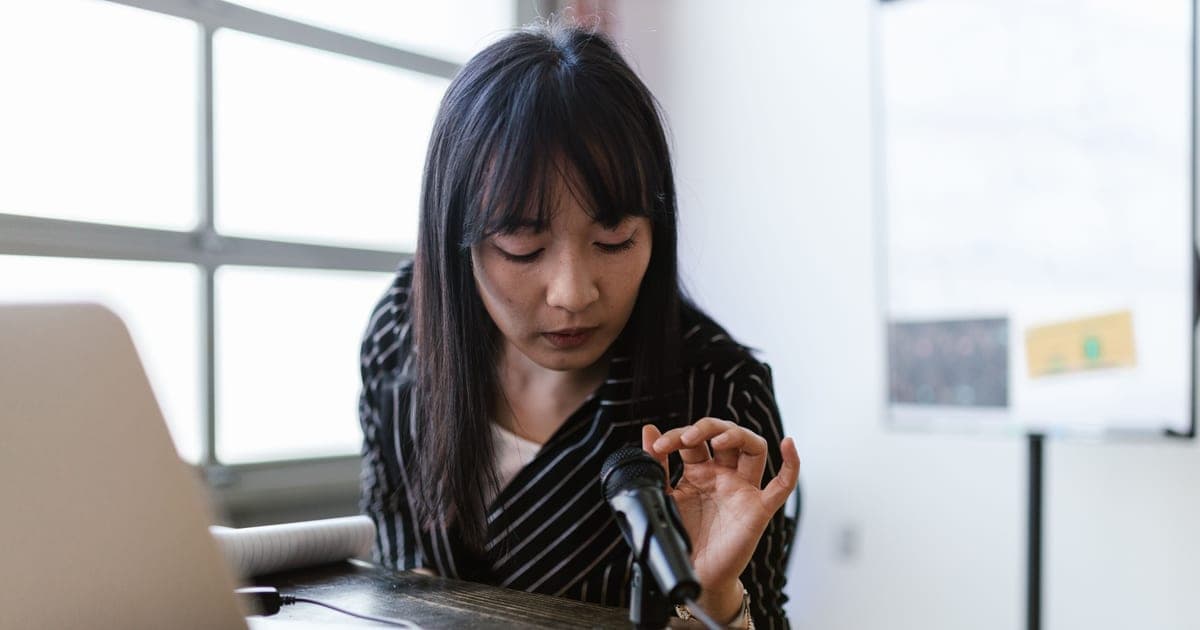
For most people, the best webcam for interviews is a 1080p USB webcam costing roughly $25 to $70, such as the Logitech Brio 101 or Logitech C920s. A recent laptop camera or your phone may be just as good and costs nothing. Interview platforms send much less detail than a 4K camera captures, so lighting, eye-level placement and upload speed affect how you look more than the camera does.
This page covers what Zoom, Microsoft Teams, Google Meet and HireVue actually send, which cameras suit which budget, and how to use a phone as a webcam for free. It ends with a 15-minute check that works whether your interview is at 3pm in Lagos or 10pm in Manila.
Quick answer
A 1080p webcam is the most worth paying for in video interviews. Microsoft Teams caps call video at 1080p and 30 fps, and HireVue's one-way interviews record at about 480p (vendor documentation, checked November 2026). A Logitech Brio 101 or C920s, a recent laptop camera, or an iPhone or Pixel used as a webcam is enough. Spend any spare money on a lamp in front of you.
What resolution does a webcam need for a job interview?
A webcam for a job interview needs 1080p at most, because no major interview platform sends more than that to the interviewer. Each platform compresses your video to suit the connection, and the resolution the interviewer sees is usually lower than your camera records.
The table below shows what each platform's own documentation says, as of November 2026.
| Platform | Most video it uses | Upload speed it asks for | Source |
|---|---|---|---|
| Microsoft Teams | Up to 1080p and 30 fps | 1.5 Mbps recommended for one-to-one video, 4 Mbps for best performance | Microsoft Learn |
| Zoom | 720p or 1080p in one-to-one calls | 1.2 Mbps for 720p; 3.8 Mbps up for 1080p | Zoom Support |
| Google Meet | "Full HD" in the optimal tier, which lists a 1080p camera | No Mbps figure on the hardware page | Google Meet Help |
| HireVue one-way interview | About 480p at 24 to 30 fps | 350 kbps recommended, 100 kbps minimum | HireVue HV4 specifications |
Microsoft's Teams network guidance says Teams delivers "up to 1080p video resolution, and up to 30 fps" when bandwidth isn't limited, and can deliver HD video in under 1.5 Mbps. When bandwidth is short, Teams puts audio quality ahead of video quality.
Zoom's system requirements page lists 1.2 Mbps up and down for 720p in a one-to-one call, and 3.8 Mbps up with 3.0 Mbps down for 1080p. Zoom asks for an "HD webcam", built in or USB, and doesn't recommend any particular model.
Google Meet's hardware requirements put a "1080p camera" in the optimal tier, alongside an 11th-generation Intel i5 or i7 processor and a graphics card with WebGL 2.0. Meet adjusts quality automatically to your device's performance.
HireVue's HV4 technical specifications say one-way interviews on the web use about 3.75 MB a minute at 24 to 30 fps and 480p (VGA). That page is version 2.0, effective 1 February 2025, and the site's navigation lists a later version, so check the test link in your own invitation for current requirements.
What this means when you shop
A 4K webcam is wasted on a job interview. The platform scales the image down to 1080p, 720p or lower before the interviewer sees it. A 60 fps camera doesn't help on Teams either, because Teams caps video at 30 fps. Pay for a clean 1080p image in poor light and a sensible field of view, not for resolution.
Is your laptop webcam good enough for an interview?
A laptop webcam is good enough for an interview if it records 1080p and you light your face properly. Many interviewers see laptop cameras all day and won't notice the difference between a built-in camera and a $70 webcam. They will notice a dark, grainy face filmed from below.
Your laptop camera is probably holding you back if:
- the laptop is several years old and the camera is 720p or lower (check the specification sheet for your model)
- the picture turns grainy or smeared as soon as the room light dims
- the camera sits below the screen or on the keyboard, so it films up your nose
- the colour looks green or orange even with a white lamp on
You can find out in two minutes. Open the camera preview in Zoom, Teams or Meet at the time of day your interview will happen and record a 30-second clip. If you can read your own facial expressions clearly, keep the laptop camera and spend the money elsewhere.
Settings worth changing first
On Windows 11, go to Settings > Bluetooth & devices > Cameras and select your camera. Microsoft's camera settings page lists brightness, contrast, sharpness, saturation and video HDR, shown only when your camera supports them. Copilot+ PCs may also offer Windows Studio Effects such as automatic framing, portrait light and eye contact.
Raise the brightness slightly before you buy anything. Turn off "eye contact" correction if it makes your eyes look fixed or unnatural in the preview.
Can you use your phone as a webcam for an interview?
Yes, you can use a phone as a webcam for an interview. iPhones and Google Pixel phones do it with built-in features. In our view, the rear camera on a recent phone often gives a better picture than an older laptop webcam, so try this before you spend money.
iPhone with a Mac (Continuity Camera)
Continuity Camera is Apple's feature that turns an iPhone into a webcam for a Mac. Apple's support page lists these requirements as of November 2026:
- iPhone XR or later, running iOS 16 or later
- a Mac running macOS Ventura 13 or later
- both devices signed in to the same Apple Account with two-factor authentication
- Bluetooth and Wi-Fi turned on, and the devices close together
Mount the iPhone horizontally, locked and stable, with the rear cameras facing you. Plug it in so the battery doesn't run down mid-interview. Apple lists Center Stage, Portrait mode and Studio Light among the effects that work in FaceTime and many other video apps. Continuity Camera only works with a Mac, so an iPhone owner on a Windows laptop needs a different route.
Google Pixel with a laptop (webcam mode)
Google's Pixel help page gives three steps:
- Connect the phone to your computer with a USB cable that carries data, not just power.
- Tap the "Charging this device via USB" notification on the phone.
- Under "Use USB for", choose Webcam.
Then pick the phone as the camera in your video app's settings. The phone keeps charging and you can switch its screen off. The computer has to support USB Video Class (UVC), which Google describes as covering laptops, among other devices. You can't use a Pixel as a webcam for another Pixel.
Other Android phones
Google's help page covers Pixel phones only. If you have a Samsung, Xiaomi, Tecno, Infinix or other Android phone, check your manufacturer's support pages for a built-in webcam option before installing a third-party app. Whatever you use, test it on the actual interview platform a day ahead, not ten minutes before.
Which webcam should you buy for interviews?
Buy the cheapest reputable 1080p webcam that looks good in your room's light. The cameras below come from Logitech, whose specifications we could confirm on the maker's or a retailer's pages in 2026. RemoteApply hasn't tested these cameras. The specifications are the manufacturer's, and the prices are dated snapshots.
| Camera | Video | Price seen (USD) | Best for |
|---|---|---|---|
| Your phone (iPhone XR or later, Pixel) | Depends on phone | $0 | Anyone with a supported phone and a stand |
| Logitech Brio 101 | 1080p, 30 fps, built-in mic, sliding privacy shutter | $39.99 list, $24.99 on sale (PCGamesN, January 2026) | Tight budgets; replacing a poor laptop camera |
| Logitech C920s Pro HD | 1080p or 720p, 30 fps, 78° field of view, autofocus, dual mics, privacy shutter | $69.99 (Logitech US store, November 2026) | A long-lasting everyday camera for interviews and daily calls |
| Logitech MX Brio | 4K at 30 fps or 1080p at 60 fps, dual beamforming mics, rotating shutter | Not confirmed on Logitech's store in November 2026 | People who also record video or present; more than an interview needs |
Sources: PCGamesN's Brio 101 deal report (21 January 2026), Logitech's C920s store page and Logitech's MX Brio page.
The Logitech C920s is the safe default. It's a 1080p camera with a 78° field of view, autofocus and a lens cover, priced at $69.99 on Logitech's US store as of November 2026. The Brio 101 does the same basic job for less. The MX Brio's 4K mode is useful for recording content, but in an interview the platform throws most of that detail away.
Other brands such as Anker, EMEET and NexiGo appear on many review lists. Their specifications differ by model, so judge them against the table in the next section rather than by brand.
Which webcam features matter for interviews?
This table rates common webcam features for interview use.
| Feature | Matters for interviews? | Why |
|---|---|---|
| 1080p at 30 fps | Yes | Matches the highest Teams and Zoom will normally send |
| 4K | No | Scaled down by the platform before the interviewer sees it |
| 60 fps | No | Teams caps video at 30 fps; talking heads don't need more |
| Field of view of 65° to 78° | Yes | Shows your head and shoulders, not your whole room |
| Wide field of view (90° or more) | Usually no | Shows more background, and your face looks smaller |
| Autofocus | Helpful | Keeps you sharp when you lean forward |
| Low-light or auto light correction | Helpful | Evening interviews across time zones are common |
| Built-in microphone | Backup only | A headset picks up less room echo and keyboard noise |
| Privacy shutter | Nice to have | Easy proof the camera is off between calls |
| USB-A or USB-C plug | Check | Many newer laptops only have USB-C; budget for an adapter |
Audio carries more weight than video in an interview, because a frozen picture is forgivable and an inaudible answer isn't. Our guide to choosing a headset for remote work calls covers that side.
Buying a webcam outside the United States
The US prices above are benchmarks only. Webcam prices in Lagos, Karachi, Manila, São Paulo or Nairobi include import costs and local retailer margins, and the same model can cost noticeably more or less. Before you buy:
- Check that a local seller offers returns. Some cameras that look fine in a product photo look poor in a dim bedroom.
- On large marketplaces, buy from the brand's official store or an authorised reseller where one exists.
- Check that the warranty is valid in your country. Some manufacturers' warranties are regional.
- If the price is a stretch, use your phone for this interview and buy a camera once the job pays.
Why lighting matters more than the camera, especially across time zones
Light is the biggest single improvement to how you look on a video interview, and remote candidates often interview in the dark. A cheap camera in good light beats an expensive camera in a dim room, because small webcam sensors produce noise and smearing when light is low.
Time zones make this worse. US daylight saving ended on 1 November 2026, so New York is on UTC-5 until 14 March 2027. UK and EU clocks went back on 25 October 2026.
| Interview at 9am New York (UTC-5) | Local time |
|---|---|
| São Paulo (UTC-3) | 11am |
| London (UTC+0) | 2pm |
| Lagos (UTC+1) | 3pm |
| Kraków (UTC+1) | 3pm |
| Nairobi (UTC+3) | 5pm |
| Mumbai (UTC+5:30) | 7:30pm |
| Manila (UTC+8) | 10pm |
A candidate in Manila or Mumbai interviewing for a US role will usually be on camera after dark. A 4pm Pacific interview (UTC-8) is 8am in Manila the next morning, which can bring harsh low sun through an east-facing window. Run your test call at the same local time as the real interview.
A lighting setup that costs very little
- Put the main light in front of you, behind or just above the camera. A window you face is ideal in daylight.
- Never sit with a window or bright lamp behind you. The camera exposes for the bright area and turns you into a silhouette.
- At night, use a desk lamp with a white or daylight bulb. Point it at a wall or sheet of paper beside the camera so the light bounces softly onto your face.
- Turn on the room's main light too, so the background isn't black.
- Avoid relying only on an overhead ceiling light, which casts shadows under your eyes.
A ring light is optional. It helps, but a well-placed desk lamp you already own does most of the same job.
Power cuts and brownouts
If your area has scheduled outages (load-shedding in South Africa, brownouts in parts of the Philippines, Pakistan or Nigeria, for example), plan for one during the interview. Charge the laptop fully, keep a phone hotspot from a different network ready, and have a battery lamp or a phone torch you can prop behind the camera. Our article on a cheap home office setup that passes an equipment check covers backup power and connections in more detail.
Where should the webcam be placed for an interview?
The webcam should sit at eye level, about an arm's length away, with your head and shoulders filling most of the frame. A laptop flat on a desk films you from below. Stack books under it until the lens is level with your eyes.
- Framing: leave a small gap above your head. Your shoulders should be visible, and the frame should stop around mid-chest.
- Eye contact: look at the lens when you are answering and at the screen when you are listening. Moving the video window to the top of your screen, right under the camera, makes this easier.
- External webcams: clip the camera to the top of the screen you'll look at. With two monitors, put the camera on the one showing the interviewer.
- Phones: use a small tripod or phone holder, with the phone held horizontally. A phone leaning against a mug will slip.
- Background: a plain wall, a tidy shelf or a closed door is enough. Background blur is fine, but check that it doesn't flicker around a headset or hair.
What you wear also affects how the camera handles exposure. Very bright white and fine stripes can cause problems. Our article on what to wear to a remote job interview covers clothing.
Upload speed: the part of video quality a webcam can't fix
Your upload speed decides how much of your camera's picture reaches the interviewer. Zoom asks for 1.2 Mbps for a one-to-one 720p call and 3.8 Mbps upload for 1080p (Zoom Support, as of November 2026). If your connection uploads at 2 Mbps, a 1080p webcam will still be sent at a lower resolution.
Many home connections in South and Southeast Asia, Africa and Latin America download quickly but upload far more slowly. Check the upload figure, not just the headline download speed. Our guide to the internet speed you need for Zoom calls explains how to test it and what the numbers mean.
Microsoft's Teams guidance gives two more tips that apply to any platform:
- Wi-Fi band: the 5 GHz band is better suited to real-time media than 2.4 GHz, although it covers a shorter range.
- VPNs: VPNs typically aren't designed for real-time media and can add latency. Microsoft recommends sending Teams traffic outside the VPN.
If you can, plug the laptop into the router with a cable for the interview.
How to prepare your webcam for a one-way video interview
A one-way video interview is a recorded interview in which you answer on-screen questions with no one live on the call. HireVue, Willo, Spark Hire and similar tools work this way. Camera quality matters even less here: HireVue's specifications describe 480p recording, and the platform recommends only 350 kbps of upload bandwidth.
What does matter is that the browser can reach the camera. HireVue's HV4 specifications list Chrome (recommended), Firefox, Safari 15 or later and Edge 95 or later. Questions that include screen sharing need the latest Chrome or Edge. Grant camera and microphone permission when the browser asks, and close Zoom or Teams first, because some systems let only one app use the camera at a time.
For how these recorded interviews are scored and how to answer, see our guide on passing a HireVue interview.
A 15-minute webcam check before your interview
Run this check the day before, at the same local time as the interview.
- Open the actual platform. Use the link from the invitation if it has a test page, or the camera preview in Zoom, Teams or Meet settings.
- Choose the right camera. If you have a laptop camera and an external one, make sure the app has selected the one you intend to use.
- Set the light. Lamp in front, nothing bright behind you, room light on.
- Raise the camera to eye level. Books, a box or a stand.
- Record 30 seconds of yourself talking. Watch it back. Can you see your expressions clearly? Is anything distracting behind you?
- Test your upload speed and note the result. If it's below the platform's figure, move closer to the router or use a cable.
- Check the audio with your headset, not the webcam microphone.
- Close everything else that uses the camera or the connection: other video apps, cloud backups, large downloads.
- Charge everything. Laptop, phone, and a power bank if your area has outages.
- Prepare a fallback. Have the interview app installed on your phone and the recruiter's email address to hand in case the laptop fails.
If the recording looks clear, you're ready. Buying a better camera won't add much after this point.
Frequently asked questions
Is a 4K webcam worth it for job interviews?
No, a 4K webcam isn't worth it for job interviews alone. Microsoft Teams caps call video at 1080p and 30 fps, and HireVue records one-way interviews at about 480p, according to their own documentation as of November 2026. Buy 4K only if you also record videos or stream.
Is 720p good enough for a Zoom interview?
Yes, 720p is good enough for a Zoom interview if your face is well lit. Zoom's own requirements list 720p for one-to-one calls at 1.2 Mbps, and that's what many calls end up using on ordinary home connections. Light and camera height make a bigger visible difference than the step from 720p to 1080p.
What is the cheapest webcam that works well for interviews?
The cheapest option is the phone you already own, used as a webcam through Apple's Continuity Camera or Google's Pixel webcam mode. If you need to buy one, 1080p models like the Logitech Brio 101 had a $39.99 list price and sold for $24.99 on sale in January 2026, according to PCGamesN. Local prices outside the US vary.
Do interviewers care about webcam quality?
Interviewers rarely judge the camera itself, but they do notice when they can't see your face. In our experience, the common problems are a dark image, a camera pointing up from below, and a picture that freezes because of a slow upload. Fix those three and any reasonable camera is acceptable.
Should I use background blur or a virtual background in an interview?
Background blur is acceptable in most interviews, and a plain real background is safer. Blur and virtual backgrounds can flicker around hair, hands and headsets, which is distracting. If you use one, test it in the preview with your headset on and your hands moving.
Is the webcam's built-in microphone good enough for an interview?
A webcam's built-in microphone works as a backup but isn't ideal as your main microphone. Webcam microphones sit further from your mouth and pick up room echo and keyboard noise. Wired earphones with a microphone, or a headset, usually sound clearer to the interviewer.
Do I need a ring light for a video interview?
No, you don't need a ring light for a video interview. A desk lamp with a white bulb, placed behind the camera and bounced off a wall, gives similar results. Daylight from a window you face works well for daytime interviews.
Key takeaways
- A 1080p webcam is the most worth paying for in interviews, because Teams caps video at 1080p and 30 fps and HireVue records at about 480p (vendor documentation, November 2026).
- A recent laptop camera, an iPhone XR or later on a Mac, or a Pixel in webcam mode can replace a bought webcam at no cost.
- The Logitech C920s ($69.99 on Logitech's US store, November 2026) and Brio 101 are reliable 1080p choices; a 4K model adds cost but no visible benefit in an interview.
- Lighting from in front, a camera at eye level and enough upload speed (1.2 Mbps for 720p on Zoom) improve your picture more than any camera upgrade.
- Candidates in Asia and Africa interviewing for US roles often interview after dark, so test your setup at the real interview time.
Next steps
Run the 15-minute check above on the platform named in your invitation, then put your preparation time into the answers. Our interview question guides by role cover what remote employers ask. If you're still looking for the next interview, browse remote jobs and set up an email alert. Every listing shows where applicants may live, so you only apply to roles open to your country. RemoteApply members ($29 a month, cancel any time) can also book interview preparation sessions with the team.
Specifications, prices and platform requirements in this article were checked on the vendors' own pages and the listed sources in November 2026.
Sources
- Prepare your organization's network for Teams, Microsoft Learn
- Zoom system requirements: Windows, macOS, Linux, Zoom Support
- Google Meet hardware requirements, Google Meet Help
- HV4 Technical Specifications, HireVue
- Use iPhone as a webcam for your Mac, Apple Support
- Use your Pixel phone as a webcam, Google Pixel Camera Help
- Manage cameras with Camera Settings in Windows 11, Microsoft Support
- C920S Pro HD Webcam, Logitech US store
- Logitech Brio 101 deal, PCGamesN
- MX Brio 4K Webcam, Logitech Hong Kong


