How to Become a Remote Tutor
Become a remote tutor by picking a subject, joining a platform that accepts your country and teaching as a contractor. Eligibility, pay and hours compared.

By Naomi Carter, Remote roles and AI training writer
Updated 14 min read
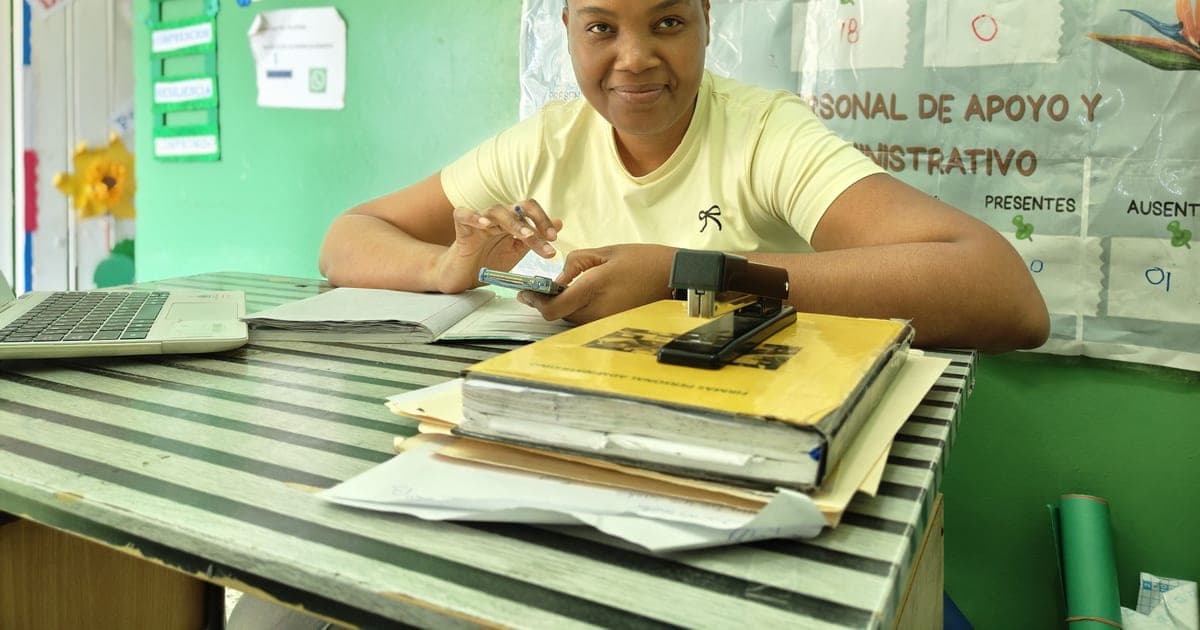
To become a remote tutor, pick one subject and one type of student you can teach well. Then join a tutoring platform that accepts people from your country, or find students directly, and set up a quiet space with a webcam, a headset and stable internet. Most of the effort goes into choosing a route that will actually take you, because many tutoring companies only hire in one country.
This page sets out the four routes, which ones accept tutors from where, what the platforms pay and take, the hours you'll realistically work across time zones, and how money and tax work once you're paid.
Quick answer
To become a remote tutor, choose a subject and student level, then apply to a platform that accepts your country. Marketplaces such as Preply accept tutors without certificates. Companies such as Tutor.com (US only) and MyTutor (UK university students) restrict who can apply. Expect to work your students' evenings, to be paid as a self-employed contractor, and to handle your own tax (as of November 2026).
What does a remote tutor actually do?
A remote tutor is a self-employed teacher who gives one-to-one or small-group lessons over video, usually in a language, a school subject or a test such as an exam or university entrance test. Most remote tutoring is contract work. You're paid per lesson or per minute, not a salary, and nobody guarantees you hours.
The work splits into three kinds:
- Language tutoring, mostly English, for adults practicing conversation or preparing for exams. This is the biggest market and the one most open to tutors outside the US and UK.
- Academic tutoring in maths, sciences or writing for school or university students. Platforms often want you to follow a national curriculum, so they recruit in that country.
- Test preparation and professional skills, such as coding, interview practice or a professional exam, where subject expertise matters more than teaching credentials.
If you're mainly interested in English teaching, the online English tutor role guide covers the skills and day-to-day work in more depth.
Do you need a degree or certificate to tutor online?
No, many platforms accept tutors without a degree or teaching certificate. Preply's tutor page says "No specific certification or teaching experience is required" and asks only for a laptop or desktop, a stable connection, a webcam and a microphone (Preply, as of November 2026).
The exceptions are worth knowing before you apply:
- Curriculum tutoring companies set grade requirements. MyTutor asks for A grades at GCSE or A-level in the subject and enrolment at, or recent graduation from, one of its listed UK universities (MyTutor apply page, as of November 2026).
- Some marketplaces have two tutor levels. italki separates professional teachers from community tutors. Checking credentials and experience is part of its application review, covered in our article on italki's teacher application.
- ESL companies teaching children often ask for a degree or a TEFL certificate. Which certificates employers accept is covered in where to get a TESOL or TEFL certificate that employers accept.
A credential helps you charge more on marketplaces, where students compare profiles. It's rarely what gets you approved.
The four routes into remote tutoring
There are four ways to start, and they differ mainly in who sets your rate and who finds the students.
1. Tutoring marketplaces (you set the rate)
A tutoring marketplace is a platform where you create a profile, set your own hourly price and wait for students to book you. The platform takes a commission. Preply and italki are the best-known. Marketplaces are the most open route for people outside the US, UK and Canada, but you compete on price and reviews, and the first months are slow.
2. Tutoring companies (they set the rate)
A tutoring company recruits tutors, matches them with students and pays a fixed rate. Tutor.com and MyTutor work this way. The work arrives more steadily, but these companies usually hire in one country because they follow that country's curriculum and contractor rules.
3. ESL conversation companies
An ESL company (English as a Second Language) pays you per minute or per lesson to talk with learners, often with materials provided. Approval can be quick, and the pay is usually lower than marketplace rates. Some limit tutors to native speakers or particular nationalities. For a list of companies that supply both students and lesson materials, see online ESL companies that provide students and materials.
4. Independent tutoring
Independent tutoring means you find students yourself, through referrals, social media, a website or freelance sites such as Upwork. You keep the whole fee, minus payment costs. You also do your own marketing, booking, cancellations and payment chasing. Many tutors start on a platform to collect reviews and experience, then move regular students to direct arrangements where the platform's rules allow it. Check the terms first. Both Preply and italki bar contact details on profiles.
Which tutoring platforms accept you from your country?
The table below compares five well-known platforms from their own pages. The short version: marketplaces are open far more widely than tutoring companies.
| Platform | Type | Who can apply | How pay works | Payout methods | Checked |
|---|---|---|---|---|---|
| Preply | Marketplace | No certificate needed; country list not stated on its tutor page | You set your rate; Preply keeps 100% of trial lessons, then 33% falling to 18% | PayPal, Payoneer, Skrill, Wise (listed as Transferwise) | Nov 2026 |
| italki | Marketplace | Passport or government ID required; background checks where law allows | You set your rate; fees vary by lesson type, package size and performance | Paid in italki Credits, withdrawn through third-party methods | Nov 2026 |
| Tutor.com | Company | US residents only (Puerto Rico included, other territories excluded) | Paid on a regular schedule, no invoicing; rates not published on apply page | Not stated on apply page | Nov 2026 |
| MyTutor | Company | UK university students or recent graduates, eligible to work in the UK | £13 to £120 an hour, paid every two weeks | Not stated on apply page | Nov 2026 |
| Outschool | Class marketplace | Country list not stated on its educator home page | You price your classes; commission not stated on that page | Moving from PayPal to Stripe | Nov 2026 |
Sources: Preply tutor page, italki Teacher Policy, effective 30 January 2026, Tutor.com apply page, MyTutor apply page, Outschool educator home, all opened November 2026.
Two things stand out. Tutor.com states plainly that it accepts applications only from the US, and says this "may change in the future" (Tutor.com, as of November 2026). MyTutor requires that you can register as self-employed with HMRC, the UK tax authority, which effectively limits it to people with the right to work in the UK.
Preply's tutor page doesn't list eligible countries, and Outschool's educator home page doesn't either. Before you spend an hour on a profile, check the platform's help centre for supported countries and, separately, whether your preferred payout method works where you live. A platform that accepts you but can't pay you into an account you can use doesn't help.
Step by step: how to become a remote tutor
These are the steps in the order that wastes the least time.
- Pick one subject and one student. "IELTS speaking for adults in Brazil" or "GCSE maths for UK teenagers" gets more bookings than "English and maths for everyone". Students search by need.
- Check where you can apply. Use the table above, then read each platform's own requirements. If a company hires only in the US or UK and you live elsewhere, move on. Applying anyway wastes your time and theirs.
- Check how you'll be paid. Confirm that PayPal, Payoneer, Wise or Stripe works in your country and can withdraw to your local bank. Our guide to getting paid as an independent contractor for a foreign company covers the options.
- Set up your space and equipment. You need a laptop or desktop (most platforms don't support teaching from a phone), a headset with a microphone, a webcam, a plain background and a backup connection such as a mobile hotspot on a different network.
- Record a short introduction video. Preply asks for one of up to two minutes (Preply, as of November 2026). Speak at your teaching pace, say who you help and with what, and show your face in good light.
- Write a profile that answers the student's question. Lead with the outcome ("I help adults pass the IELTS speaking test"), then your background, then how a lesson runs. Leave out contact details. Preply and italki both prohibit them.
- Set a starting rate and your availability. Open hours in your target students' evenings and weekends (see the time-zone table below).
- Apply to two or three platforms at once. Reviews take days. Preply says it reviews profiles within three business days, and approval doesn't guarantee bookings.
- Plan your first five lessons. Have a level check, a lesson structure and homework ready so a trial student wants to book again.
- Register for tax where you live. You're self-employed in almost every arrangement. See the tax section below.
How much do remote tutors earn?
Remote tutor pay ranges from a few dollars an hour on per-minute conversation platforms to more than $50 an hour for specialist subjects. On marketplaces, what you take home depends on the price you set and the commission.
The only figures here come from the platforms' own pages:
- Preply says English tutors on its platform charge $15 to $25 an hour on average, and that popular tutors earn up to $550 a week. The page doesn't date these figures (Preply, as of November 2026).
- MyTutor advertises £13 to £120 an hour, paid every two weeks, for UK university students (MyTutor, as of November 2026).
US and UK figures are benchmarks, not what a tutor in Nairobi or Dhaka will necessarily earn. On marketplaces, tutors in different countries compete for the same students, and many price below the US average. Our online maths tutor salary guide covers pay for academic tutoring.
Worked example: what you keep from a Preply lesson
Preply keeps 100% of a trial lesson with a new student. On later lessons it takes a commission that starts at 33% and falls to 18% as you teach more hours (Preply, as of November 2026). Here is the maths at a $20 hourly rate. This is an example, not a forecast.
| Scenario (example) | Rate | Commission | You keep a lesson |
|---|---|---|---|
| Trial lesson, new student | $20 | 100% | $0 |
| Regular lesson, new tutor | $20 | 33% | $13.40 |
| Regular lesson, top tier | $20 | 18% | $16.40 |
Assumptions for a first month: you teach five trial lessons and three of those students book eight more lessons each at the 33% tier. That's 24 paid lessons × $13.40 = $321.60, before payout fees and tax, for 29 hours of teaching. In that example your effective rate is about $11.09 an hour, not $20. This is why trial-to-regular conversion matters more than your headline price. The full commission rules are covered in Preply's commission for tutors.
What hours will you work as a remote tutor?
Remote tutors work when their students are free: after school, after work and at weekends in the student's time zone. For many tutors outside North America and Europe, that means late nights or early mornings.
The table shows common tutoring windows converted to six cities, in northern winter (after the clocks changed in late October and early November 2026).
| Student window | New York (UTC−5) | London (UTC+0) | Lagos (UTC+1) | Mumbai (UTC+5:30) | Manila (UTC+8) | São Paulo (UTC−3) |
|---|---|---|---|---|---|---|
| US after school, 4pm to 8pm New York | 4pm to 8pm | 9pm to 1am | 10pm to 2am | 2:30am to 6:30am | 5am to 9am | 6pm to 10pm |
| UK after school, 4pm to 8pm London | 11am to 3pm | 4pm to 8pm | 5pm to 9pm | 9:30pm to 1:30am | Midnight to 4am | 1pm to 5pm |
| Japan adult evening, 7pm to 10pm Tokyo (UTC+9) | 5am to 8am | 10am to 1pm | 11am to 2pm | 3:30pm to 6:30pm | 6pm to 9pm | 7am to 10am |
What follows from the table:
- Latin America lines up well with US students. São Paulo is two hours ahead of New York in northern winter, so US after-school hours fall in the São Paulo evening.
- Africa and much of Europe suit UK students. Lagos is one hour ahead of London in winter.
- Asia suits adult learners in Asia. A Manila or Mumbai tutor teaching Japanese or Korean adults works in the local afternoon or evening rather than overnight.
- Clocks change on different dates. US clocks go forward on 14 March 2027 and UK and EU clocks on 28 March 2027. For two weeks the New York to London gap is four hours instead of five, which moves lessons booked in the student's time.
How do remote tutors get paid, and who handles the tax?
Almost every remote tutor is an independent contractor, which means the platform doesn't deduct income tax and you declare the income yourself. MyTutor states this directly: tutors must be able to register as self-employed with HMRC (MyTutor, as of November 2026).
Payout methods
Preply lists PayPal, Payoneer, Skrill and Transferwise (now Wise) as payout options (Preply, as of November 2026). italki pays in italki Credits held in a Teacher Wallet, and you withdraw them through third-party methods that may charge their own fees. italki may also delay payouts in some cases, such as a high volume of disputes (italki Teacher Policy, effective 30 January 2026). Outschool is moving educator payouts from PayPal to Stripe and says it covers Stripe's payout-processing costs (Outschool, as of November 2026).
Each payout method charges for withdrawal and currency conversion, and the fees change. Check the provider's own fee page for your country before you choose, and work out what reaches your bank on a typical week's earnings.
Tax by country
Tax on tutoring income depends on where you live, not where the platform or student is. General guidance has limits, so confirm with your tax authority or a local accountant. These articles in this series cover particular countries:
- India: how to file tax when you work remotely for a foreign company
- Philippines: BIR registration for freelancers, step by step
- South Africa: tax on foreign income for freelancers
- UK: freelance work and tax basics for remote contractors
Do you need a background check to tutor children online?
Often yes, if you teach under-18s. The rules depend on the platform and your country. italki's Teacher Policy says teachers agree to criminal and sex-offender record checks and identity verification where the law permits (italki, effective 30 January 2026).
In the UK, a basic DBS check (Disclosure and Barring Service, the criminal record check for England and Wales) costs £20, usually takes up to three days to process, and is open to people aged 16 or over working in England or Wales (GOV.UK, as of November 2026). The UK government's code of practice for out-of-school settings lists private tuition among the settings it covers and was last updated on 9 February 2026 (GOV.UK). Parents increasingly ask independent tutors for a check before booking.
Outside the UK, the equivalent is usually a police clearance certificate from your national police or justice ministry. Platforms that need one will tell you which document to supply.
What goes wrong for new remote tutors
These are the problems we see most often among people starting out:
- Approved but no bookings. Marketplace approval only lists you. Your photo, video, headline and price decide whether anyone books. If trials don't arrive, see no trial lessons or bookings on Preply.
- Undercharging forever. A low launch price helps you win reviews. Raise it once you have regular students and a waiting list, and check how the platform handles price changes for existing students.
- Hours that wreck your sleep. A 2am to 6am block for US students can work for a few months. Plan your day around it, or target students in time zones closer to your own.
- A payout method you can't use. Check this before you spend hours on a profile.
- Scam "tutoring jobs". No genuine platform charges an application fee, sends a cheque to buy equipment, or interviews only on Telegram or WhatsApp. Our article on remote job scam red flags shows the common patterns.
Frequently asked questions
Can I become a remote tutor with no experience?
Yes. Preply states that no certification or teaching experience is required to join as a tutor (as of November 2026). Without experience you'll usually start at a lower price on a marketplace and build reviews, while curriculum companies such as MyTutor set grade or university requirements.
Can I tutor online from outside the US or UK?
Yes, mainly through marketplaces such as Preply and italki and through ESL companies, which take tutors from many countries. Tutoring companies often don't: Tutor.com accepts applications only from the US (as of November 2026), and MyTutor requires UK work eligibility. Our guide to online tutoring jobs in India shows how this works for one large market.
How long does it take to start tutoring online?
Usually a few days to a few weeks. Preply says it reviews profiles within three business days, and MyTutor's process is an application form, a 15-minute video interview and profile setup (as of November 2026). Getting regular students on a marketplace typically takes longer than approval.
What equipment do I need to be an online tutor?
You need a laptop or desktop computer, a webcam, a microphone (a headset is best) and a stable internet connection, which is Preply's stated minimum as of November 2026. A backup connection such as a mobile hotspot on a different network, and a quiet room with a plain background, prevent most cancelled lessons.
Is online tutoring a job or self-employment?
Online tutoring is almost always self-employment. Platforms treat tutors as independent contractors, so no income tax is deducted and you declare the earnings in your country of residence. MyTutor, for example, requires tutors to register as self-employed with HMRC.
How much should I charge as a new online tutor?
Charge slightly below the established tutors in your subject on the same platform, then raise your price once you have reviews and regular students. Preply reports that English tutors on its platform charge $15 to $25 an hour on average (undated figure, checked November 2026). Remember that commission and payout fees come out of that price.
Which subjects pay best for online tutors?
Specialist subjects such as advanced maths, sciences, coding and exam preparation generally pay more than conversational English, because fewer tutors can teach them. MyTutor's advertised range of £13 to £120 an hour (as of November 2026) shows how wide the spread is within one platform.
Key takeaways
- Becoming a remote tutor means choosing a subject and student level, joining a platform that accepts your country, and working as a self-employed contractor.
- Marketplaces such as Preply and italki are the most open route internationally. Tutoring companies such as Tutor.com (US only) and MyTutor (UK) usually restrict who can apply.
- Preply keeps 100% of trial lessons and 33% to 18% of later lessons, so a $20 rate can mean roughly $11 to $16 an hour in practice.
- Tutoring hours follow the student's evenings and weekends, which puts many Asian and African tutors teaching US students overnight.
- Check your payout method and your tax registration before you teach your first paid lesson.
Platform requirements, commissions, pay figures and payout methods were checked on each platform's own pages in November 2026.
Next steps
Pick the platform from the table that accepts your country and subject, and submit your profile this week. Meanwhile, browse remote teaching jobs on RemoteApply, where every listing shows where applicants may live. Then set up a saved search on the jobs board so new tutoring roles open to your country arrive by email.
Sources
- Teach online: Become an online tutor, Preply
- A step-by-step guide to starting online tutoring, Preply blog
- Become a Tutor, Tutor.com
- Become an Online Tutor, MyTutor
- Teacher Policy, italki
- Educator home, Outschool
- Basic DBS check, GOV.UK
- Keeping children safe in out-of-school settings: code of practice, GOV.UK